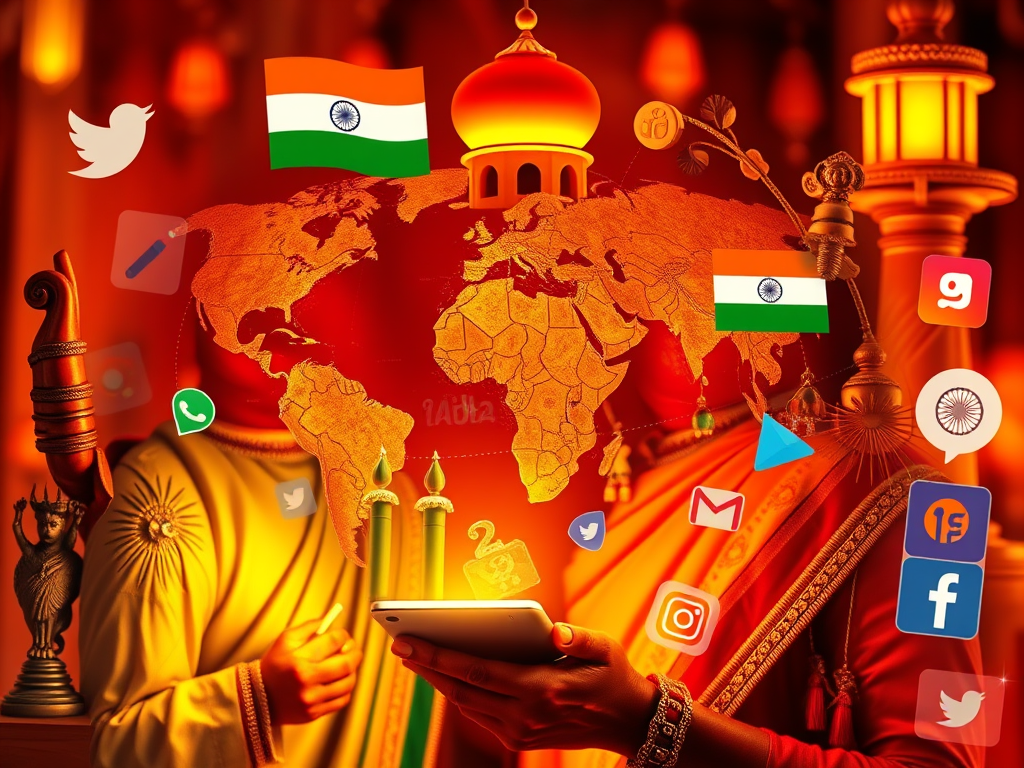
Globalization is a complex phenomenon that has profoundly impacted societies worldwide. Its effects on culture are particularly significant, prompting scholars to examine its implications through the lens of cultural studies. This discussion delves into the concept of globalization within this framework, exploring its various definitions, theories, and criticisms, with a specific focus on India. By examining the intricate interplay between globalization and Indian culture, it aims to provide a comprehensive understanding of its transformative power.
What is Cultural Studies?
Before delving into globalization, it’s essential to understand the field of cultural studies. It emerged as an interdisciplinary field in the mid-20th century, drawing on sociology, literary theory, and media studies to examine the production and consumption of meaning in society. Cultural studies scholars analyze how culture shapes our identities, values, and social relations, particularly in the context of power dynamics and social change.
Defining Globalization in Cultural Studies
Globalization, within the context of cultural studies, refers to the increasing interconnectedness and interdependence of cultures worldwide. It involves the transmission of ideas, meanings, and values across national borders, leading to intensified social relations and the formation of shared norms and knowledge. This process is facilitated by the rapid dissemination of information, ideas, and cultural products through various channels, including the internet, popular culture media, and international travel.
Cultural globalization manifests in various forms, such as the consumption of global media, the adoption of foreign cultural practices, and the emergence of global subcultures. It is a dynamic process that involves both homogenization, where cultural differences are minimized, and hybridization, where cultures interact and blend to create new forms.
Theories of Globalization in Cultural Studies
Several theories attempt to explain the dynamics of cultural globalization. These include:
Cultural Imperialism
This theory posits that globalization leads to the dominance of Western, particularly American, culture, resulting in the erosion of local traditions and the homogenization of global culture. This dominance can be seen in the widespread consumption of American media, fashion, and consumer goods in many parts of the world, including India. For example, the popularity of Hollywood movies, Western music, and fast-food chains like McDonald’s in India reflects the influence of American culture. Critics argue that this process can lead to cultural homogenization and the loss of cultural diversity.
Hybridization
This perspective suggests that cultural globalization is a long-term historical process of cultural mixing, where different cultures interact and blend, creating new hybrid forms. This theory emphasizes the dynamic and interactive nature of cultural exchange, where global and local elements combine to create unique cultural expressions. For instance, the fusion of Indian and Western musical styles in contemporary Indian music exemplifies hybridization.
Glocalization
This concept emphasizes the adaptation of global products and ideas to local contexts. It recognizes that globalization is not a uniform process and that local cultures play an active role in shaping the adoption and interpretation of global influences. An example of glocalization in India is the adaptation of McDonald’s menu to include vegetarian options to cater to local preferences.
Globalization
Globalization, as described by sociologist George Ritzer, refers to the imperialistic ambitions of nations, corporations, organizations, and their desire, indeed need, to impose themselves on various geographic areas. This concept highlights the homogenizing forces within globalization, where powerful entities seek to expand their reach and influence, potentially at the expense of local cultures. For example, the dominance of Hollywood movies in the global film market can be seen as a form of globalization.
World-Systems Theory
This theory views globalization through the lens of economic and political power relations, where core countries exert dominance over peripheral countries, leading to cultural dependency and the flow of cultural products from the core to the periphery. This can lead to the marginalization of cultures in peripheral countries and reinforce existing power imbalances.
These theories provide different frameworks for understanding the complex dynamics of cultural globalization and its impact on societies.
Key Critics and Thinkers
Numerous scholars have contributed to the understanding of globalization in cultural studies. Some key figures include:
- Roland Robertson: A sociologist who emphasizes the subjective aspects of globalization, highlighting the role of global consciousness and the compression of the world in shaping cultural identities. He argues that globalization is not just an objective process of interconnectedness but also involves the subjective experiences and interpretations of individuals and cultures.
- Anthony Giddens: A sociologist who views globalization as the intensification of worldwide social relations and the spread of modernity, leading to time-space distanciation and the erosion of traditional boundaries. He argues that globalization compresses time and space, allowing for instant communication and interaction across vast distances, which in turn transforms social structures and cultural practices.
- Arjun Appadurai: An anthropologist who explores the disjunctures and flows of culture in a globalized world, emphasizing the role of mediascapes, ethnoscapes, and ideoscapes in shaping cultural interactions. He argues that globalization involves the movement of people, ideas, and images across borders, creating complex and often unpredictable cultural landscapes.
- Ulf Hannerz: An anthropologist who focuses on the concept of creolization, where different cultures mix and create new hybrid forms, highlighting the dynamic and interactive nature of cultural exchange. He argues that globalization leads to the blending of cultural elements, resulting in new and diverse cultural expressions.
These thinkers offer diverse perspectives on the cultural dimensions of globalization, contributing to a deeper understanding of its complexities.
Globalization in India: Examples and Impact
India, with its rich and diverse cultural heritage, provides a compelling case study for examining the impact of globalization. Some notable examples include:
Bollywood and Popular Culture
The global reach of Bollywood films and music has contributed to the spread of Indian cultural elements worldwide, while also incorporating influences from other cultures. This has led to the creation of hybrid cultural forms that blend Indian traditions with global trends. For example, Bollywood films often incorporate Western music and dance styles while retaining their Indian narratives and themes. This cross-cultural exchange has made Bollywood a global phenomenon, with a significant following in many parts of the world.
Food
The globalization of food has introduced international cuisines to India, while also popularizing Indian food globally. This has led to a diversification of food choices and culinary practices in India. For instance, the availability of international fast-food chains and restaurants in India has exposed Indians to a wider range of culinary options. Conversely, Indian cuisine has gained popularity worldwide, with Indian restaurants becoming a common sight in many cities.
Technology
The rise of information and communication technologies (ICTs) has facilitated the exchange of cultural information and ideas, connecting people across geographical boundaries. This has led to increased awareness of different cultures and has contributed to the formation of global subcultures. For example, social media platforms allow Indians to connect with people from different cultures, share their own cultural experiences, and access information about other cultures.
Social Mobility
Globalization has influenced social mobility in India by creating new economic opportunities and challenging traditional social hierarchies. This has led to increased interaction between different social groups and a gradual weakening of the caste system. For instance, the growth of the IT industry in India has provided opportunities for people from various social backgrounds to achieve economic success and upward mobility. This has challenged traditional caste-based occupations and contributed to a more fluid social structure.
Changing Family Structure
Globalization has also impacted the family structure in India. The traditional joint family system, where multiple generations lived together, is gradually giving way to nuclear families, particularly in urban areas. This shift is driven by factors such as increased economic opportunities and migration, which often require individuals to move away from their extended families. The changing family structure has implications for social support systems, intergenerational relationships, and the transmission of cultural values.
Remittances
Remittances, or money sent by Indians working abroad back to their families in India, have become a significant factor in the Indian economy. These remittances contribute to household income, support local economies, and provide a safety net for families. They also have social and cultural implications, as they can influence consumption patterns, investment decisions, and social status within communities.
These examples illustrate the multifaceted impact of globalization on Indian culture, leading to both homogenization and hybridization.
Impact of Globalization on Indian Culture
Globalization has had a profound impact on Indian culture, leading to both positive and negative consequences.
Positive Impacts
- Economic Growth: Globalization has become a defining force in the 21st century, contributing to India’s economic growth by attracting foreign investment and creating new job opportunities. This has led to improved living standards for many Indians and has fuelled the growth of the middle class.
- Cultural Exchange: Globalization has facilitated cultural exchange, exposing Indians to diverse cultures and ideas from around the world. This has broadened perspectives and fostered greater understanding and tolerance of different cultures.
- Women’s Empowerment: Globalization has played a role in empowering women in India by providing them with greater access to education and employment opportunities. This has challenged traditional gender roles and contributed to greater gender equality.
- Preservation of Culture: Technology has helped preserve some dying artifacts, document local languages, and expose Indians to various global arts and movies. This has helped maintain cultural heritage and promote cultural diversity.
Negative Impacts
- Erosion of Traditional Values: Globalization has led to concerns about the erosion of traditional Indian values, such as respect for elders and the joint family system. This has created a generational divide and a clash between traditional and modern values.
- Cultural Domination: There are concerns about the dominance of Western culture, leading to the marginalization of local traditions and the homogenization of Indian culture. This can threaten cultural diversity and lead to the loss of unique cultural identities.
- Consumerism: Globalization has fuelled consumerism in India, leading to increased materialism and a shift away from traditional values. This can have negative social and environmental consequences, as it promotes unsustainable consumption patterns and contributes to environmental degradation.
- Displacement of Tribals: Globalization has led to increased cases of tribal displacement due to large-scale infrastructure projects, threatening their habitat and traditional way of life. This can result in the loss of cultural heritage and the disruption of traditional communities.
- Objectification of Women: There has been increased objectification of women and crimes against women due to globalization. This highlights the need to address the negative social consequences of globalization and protect vulnerable groups.
Overall, globalization has had a complex and multifaceted impact on Indian culture, bringing both opportunities and challenges. It is essential to critically examine these impacts and strive for a balance between embracing global influences and preserving cultural diversity.
Scholarly Works on Globalization and Indian Culture
Several scholarly articles and books discuss the theories, critics, and examples of globalization in cultural studies, with a focus on India. Some notable works include:
- “Globalization of the Media” by Daya Kishan Thussu: This article explores the key themes of cultural globalization theory, including deterritorialization, hybridization, and cosmopolitanism, and examines the role of media in shaping cultural flows.
- Fifty Key Thinkers on Globalization by William D. Coleman and Alina Sajed: This book provides an overview of the key thinkers who have shaped the globalization debate, including those who have focused on cultural globalization and its impact on societies like India.
These academic works provide valuable insights into the complexities of globalization and its impact on Indian culture, offering theoretical frameworks and empirical analyses to understand this phenomenon.
Synthesis and Conclusion
Globalization has undeniably transformed the cultural landscape of India. While it has brought economic growth, cultural exchange, and opportunities for social mobility, it has also raised concerns about the erosion of traditional values, cultural domination, and consumerism.
The impact of globalization on Indian culture is not a uniform process. It involves a complex interplay of homogenization, hybridization, and glocalization. While some aspects of Indian culture have been globalized, others have been localized, and new hybrid forms have emerged. This dynamic interplay shapes the cultural identity of India in the 21st century.
It is crucial for India to navigate the challenges of globalization while preserving its rich cultural heritage. This requires a conscious effort to promote cultural diversity, support local traditions, and ensure that the benefits of globalization are shared equitably among all social groups. Policymakers, cultural institutions, and civil society organizations need to work together to create a cultural environment that embraces global influences while safeguarding India’s unique cultural identity.
By critically examining the impact of globalization on Indian culture, we can gain a deeper understanding of its transformative power and work towards a future where cultural diversity is celebrated and preserved. This requires ongoing dialogue, critical analysis, and a commitment to fostering a culturally vibrant and inclusive society in India.