

- Introduction: Defining Genre in Film Studies and Overview of Horror, Action, and Adventure
In the realm of Film Studies, the concept of genre serves as a fundamental framework for categorizing and analysing cinematic works. Genre, in this context, functions as a system of classification predicated on shared conventions that manifest across various aspects of filmmaking, including narrative structures, stylistic choices, thematic concerns, and recurring iconography . These conventions provide a degree of predictability for audiences and filmmakers alike, establishing a set of expectations that shape the creation and reception of movies. However, it is crucial to recognize that genres are not static entities; rather, they are dynamic and continuously evolving, influenced by a complex interplay of cultural shifts, industrial practices, and technological advancements . Different theoretical approaches within Film Studies offer various lenses through which to understand genre, including historical analyses that trace the development of conventions over time, structuralist perspectives that examine the underlying patterns and codes within genres, and cultural studies approaches that explore the relationship between genres and broader societal contexts .
This note aims to provide a comprehensive exploration of three prominent film genres: horror, action, and adventure. Horror, at its core, is a genre designed with the primary intention of eliciting intense emotional responses in viewers, specifically fear, terror, and disgust . These films often delve into the darker aspects of human existence, confronting audiences with the strange, the forbidden, and events that defy rational explanation . Action cinema, conversely, prioritizes physical action and spectacle as the driving forces of its narratives . Characterized by continuous motion, including stunts, chases, fights, and explosions, action films typically revolve around a heroic protagonist who faces formidable challenges in pursuit of a clear objective . The adventure genre, while sharing some similarities with action, distinguishes itself through its focus on exploration, quests, and the overcoming of obstacles within often exotic and unfamiliar settings . These narratives often involve a journey into the unknown, where protagonists encounter danger, mystery, and the potential for discovery .
- Horror Genre in Film Studies
The horror genre stands as one of cinema’s most enduring forms, captivating audiences with its ability to tap into primal fears and elicit intense emotional responses . At its core, horror film is designed to frighten, shock, and disgust viewers, simultaneously evoking their deepest, often hidden, anxieties while paradoxically providing a captivating and entertaining experience . This paradoxical nature, where audiences willingly subject themselves to unpleasant emotions, is a key characteristic of the genre. Horror narratives often centre around the dark side of life, exploring forbidden and strange occurrences, unexplainable events, and our most fundamental fears, including vulnerability, nightmares, alienation, the terror of the unknown, the fear of death, and anxieties surrounding sexuality .
Film critic Robin Wood offered a concise definition of horror, stating that its commonality lies in the premise that “normality is threatened by the monster” . This highlights the genre’s frequent focus on disrupting established order and confronting audiences with forces that defy the accepted rules of reality. Building upon this, philosopher Noël Carroll added the crucial observation that “repulsion must be pleasurable, as evidenced by the genre’s popularity” . This underscores the complex psychological engagement that horror fosters, where the experience of fear and disgust is somehow transformed into a source of enjoyment for many viewers. The figure of the “monster,” in its various forms, often serves as a central element in horror narratives, acting as an allegorical representation of societal anxieties, repressed desires, or the embodiment of pure evil . The pleasure derived from this confrontation suggests a psychological process of confronting and potentially overcoming these fears within the safe confines of a fictional world.
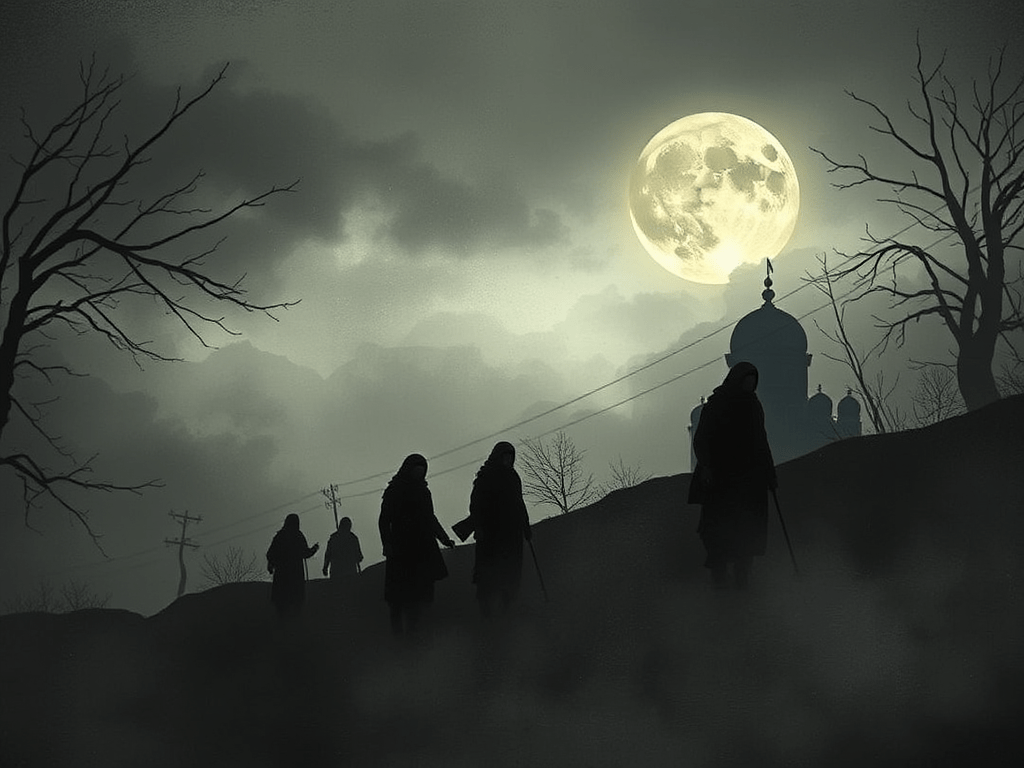
Several core elements contribute to the effectiveness of horror films in creating suspense, dread, and terror . Atmosphere plays a crucial role, often established through unsettling settings such as dilapidated houses, isolated cabins, dark woods, or abandoned asylums . Cinematic techniques like sombre, low-key lighting, often employed during night-time scenes, and strategic camera work, such as the sustained use of point-of-view shots, are instrumental in creating fear and unease . The strategic use of sound, including silence followed by sudden noises, unsettling musical scores, and eerie sound effects, further heightens suspense and prepares audiences for frightening moments . Narrative conventions in horror typically involve a single protagonist or a group facing impossible odds against a supernatural, scientifically unexplainable, or ambiguously monstrous entity driven by evil and intent on annihilation . These narratives often follow a structure of escalating tension, culminating in a climactic confrontation where the protagonist must summon courage to overcome the threat, often at great personal cost .
A recurring theme in the horror genre is the portrayal of the “other,” which can manifest as a central villain, monster, or threat that often reflects the fears being experienced by society at the time . This figure, someone feared because they are different or misunderstood, can embody anxieties related to invasion, disease, technological advancements, or social change . As culture and its fears evolve, so too does the horror genre, constantly adapting to reflect the contemporary zeitgeist . This makes horror a potent cultural artifact that can offer insights into the collective anxieties and moral panics of different historical periods.
Several key theoretical perspectives offer frameworks for understanding the horror genre’s enduring appeal and psychological impact. Psychoanalytic theory, particularly the work of Sigmund Freud, posits that horror stems from the “uncanny”—the unsettling emergence of images and thoughts from the primitive id, representing repressed desires and fears buried deep within our subconscious . Horror films, through their exploration of the familiar made strange (e.g., doubles, animated inanimate objects), tap into this feeling of unease, bringing to the surface what should remain hidden . Catharsis theory suggests that watching horror films provides a safe and vicarious outlet for releasing negative emotions like anxiety and aggression, allowing viewers to “purge” these feelings through the fictional violence and terror depicted on screen .
Sociological theory examines horror as a reflection of societal fears and anxieties . Monsters in horror films can be interpreted as symbolic representations of marginalized groups, social taboos, or anxieties about societal changes and technological advancements . The rise of specific horror cycles, such as the slasher films of the 1980s, can be seen as reflecting contemporary anxieties about violence invading seemingly safe suburban spaces . This perspective highlights horror’s role as a cultural barometer, reflecting and often critiquing the social and political landscape of its time.
Philosophical theory, most notably through the work of Noël Carroll, delves into the “paradox of horror”—the question of why we derive pleasure from being scared . Carroll argues that the “monster” is central to this paradox, defined as a being that violates categorical boundaries and is perceived as both threatening and impure, evoking a response he terms “art-horror”—a blend of fear and disgust that is paradoxically enjoyable. Tzvetan Todorov’s focus on the fantastic emphasizes the crucial role of hesitation between natural and supernatural explanations in defining the horror genre, distinguishing it from pure fantasy where the supernatural is readily accepted .
Feminist theory, particularly Barbara Creed’s concept of the “monstrous-feminine,” challenges the traditional patriarchal view of women as passive victims in horror films . Creed argues that patriarchal ideology often constructs the female reproductive body and female figures embodying power as monstrous, reflecting male anxieties about female sexuality, the maternal figure, and the potential for female agency. This perspective offers a critical lens for re-evaluating the gender dynamics within the horror genre and the portrayal of female characters as both sources of terror and potential subversion of traditional roles.
Key critics and thinkers have significantly contributed to our understanding of horror film. Robin Wood’s analysis of the monster as a representation of societal repression and oppression provided a foundational framework for understanding the genre’s allegorical potential . His distinction between progressive horror, which critiques societal norms, and reactionary horror, which reinforces them, highlights the genre’s complex relationship with social and political issues. Noël Carroll’s extensive philosophical work offered a rigorous examination of the aesthetics and psychology of horror, focusing on the audience’s paradoxical enjoyment of fear and the role of the monstrous . Barbara Creed’s ground-breaking work on the “monstrous-feminine” revolutionized feminist film theory’s engagement with horror, providing crucial insights into the gendered construction of monstrosity and the representation of women in the genre . Michelle Martinez’s sociological approach emphasizes the genre’s role in reflecting and commenting on the social and moral anxieties prevalent at the time of a film’s production, highlighting its function as a cultural mirror . Other notable critics like Carol Clover have further enriched the field with their analyses of gender roles and audience identification in horror films . The ongoing academic discourse, evidenced by journals like Horror Studies and reading lists dedicated to the subject , demonstrates the continued scholarly interest in and the evolving understanding of the horror genre in Film Studies.
- Action Genre in Film Studies
The action genre in Film Studies is characterized by its primary focus on physical action and movement, where spectacular displays of bodies, vehicles, and weapons take precedence in the narrative . These films often feature continuous motion, including physical stunts, chases, fights, battles, and races, all contributing to a visceral and exciting experience for the audience . The story typically revolves around a resourceful hero who has a clear goal but faces seemingly insurmountable odds to achieve it, often within a critical timeframe . While action can be considered a fundamental element of cinema since its inception, the action film as a distinct genre took shape in the late 1960s and early 1970s, gaining significant popularity in the 1980s with the rise of New Hollywood and anti-hero figures . It is also notable for its frequent hybridization with other genres, seamlessly blending into forms such as comedies, science fiction films, and horror films .
Several core elements define the action genre. A strong and often likable hero is central, frequently embodying courage and resourcefulness, even if possessing certain flaws . High stakes are a non-negotiable aspect, with the audience understanding that the hero has much to lose, whether it be life, love, or freedom . These stakes are often elevated through personal threats, time constraints, and significant physical challenges . The conflict is typically clear and often morally simplistic, pitting the hero against a distinct villain or opposing force with counter goals . Thrilling action sequences, including relentless car chases, intense gunfights, and elaborate stunts, are the genre’s hallmark . Many action films also incorporate a revenge plot, fueling the narrative from start to finish . Maintaining a brisk tempo through fast pacing and engaging the audience with dynamic visual storytelling are crucial for sustaining excitement .
Narrative conventions in action films often feature a heroic protagonist who is exceptionally skilled, brave, or strong, standing against overwhelming odds . A clear antagonist with distinct goals opposing the protagonist is typically present . The narrative usually involves a clear mission or objective, such as retrieving an important object, saving someone, or stopping a major catastrophe . The structure often follows a pattern of escalating challenges, culminating in a climactic confrontation between the hero and the villain . The hero may have sidekicks or allies who provide assistance, comedic relief, or emotional depth to the story . The stakes are usually high, creating urgency in the narrative .
Several key theories within Film Studies address the action genre. The concept of spectacle is central to discussions about action cinema . Some scholars, like David Bordwell, have suggested that action films often prioritize visual spectacle—the elaborate stunts, explosions, and special effects—over a finely tuned narrative . This view posits that audiences are primarily drawn to the genre for its sheer visual excitement. Conversely, other scholars, such as Geoff King, argue that scenes of spectacle can be attuned to storytelling, enhancing rather than overriding the narrative . Guy Debord’s broader theory of spectacle describes it as an overall social phenomenon where lived experience recedes into representation, with mass media being its most glaring manifestation . In the context of early cinema, the “cinema of attractions” emphasized spectacle and visual novelty over narrative, highlighting the historical importance of visual impact in film .
The portrayal of masculinity in cinema is another significant theoretical area relevant to action films . Action films often feature male protagonists who embody exaggerated traits of traditional masculinity, such as aggression, dominance, emotional stoicism, and physical prowess . While classic action heroes were often depicted as principled leaders, modern portrayals have evolved to include more complex and sometimes flawed anti-hero figures . Feminist film theory has examined how male bodies are presented as spectacle for audience consumption , and the concept of “toxic masculinity” raises critical questions about the potentially harmful societal impacts of these exaggerated masculine ideals .
The advancements in special effects have had a profound impact on the action genre . Computer-generated imagery (CGI) has enabled filmmakers to create increasingly complex and fantastical action sequences that were previously impossible with practical effects alone . This has led to debates about the balance between the realism often achieved through practical effects and the heightened spectacle offered by CGI . Nevertheless, special effects remain an integral tool for enhancing the visual excitement and pushing the creative boundaries of the action genre .
Key critics and thinkers have offered valuable insights into the action genre. David Bordwell’s perspective on spectacle versus narrative highlighted a key tension within the genre . Geoff King countered this by arguing for the potential integration of spectacle and storytelling . Yvonne Tasker’s work has explored the recurring themes of freedom and conflict in action films, as well as the performative nature of masculinity within the genre . Harvey O’Brien provided a compelling understanding of action film as a fusion of form and content, where action itself is paramount . The numerous awards for Best Action Movie given by critics’ organizations and the criteria used for film analysis further demonstrate the critical engagement with and evolving appreciation for the action genre in Film Studies .
- Adventure Genre in Film Studies
The adventure genre in Film Studies is built around the fundamental human desire for exploration and discovery, often transporting viewers to extraordinary worlds filled with thrilling expeditions and daring heroes . While sharing similarities with the action genre in its capacity to provide an action-filled and energetic experience, adventure films typically emphasize the protagonist’s conquests and explorations, often within exotic, far-away, or unfamiliar locales . The central theme is often a quest, whether it be for treasure, knowledge, or personal fulfilment, where the protagonist must overcome suspenseful puzzles and intricate obstacles to achieve their goal . These films often play on historical myths and can include subgenres such as swashbucklers, pirate movies, jungle and desert epics, historical adventures, and fantasy or mythical adventures .
Core elements of adventure films include a hero, who often begins as an ordinary person before embarking on their extraordinary journey . A clear quest or challenge is essential, igniting the plot and driving the series of events that create the storyline . The hero is typically thrust into an unfamiliar or dangerous environment, which serves not just as a backdrop but as an active element shaping the story and testing the hero’s resolve . An antagonist or villain often pursues the protagonist, increasing the stakes and heightening the tension . Throughout the adventure, the hero must face significant physical risk and peril, often putting their own life or the lives of others in danger . The narrative typically involves rising tension as the hero encounters increasingly difficult obstacles . Ultimately, the hero often undergoes a transformation, evolving from an ordinary individual into someone capable of extraordinary feats .
Narrative conventions in adventure films often follow the classic hero’s journey archetype . This typically involves a call to adventure that disrupts the hero’s ordinary world, a refusal of the call (often overcome with the help of a mentor), crossing the threshold into the special world of the adventure, facing tests, encountering allies and enemies, approaching a major ordeal, experiencing a crisis or climax, gaining a reward, and finally returning to the ordinary world, transformed by the experience . The narrative is usually linear and closed, focusing on a single quest with a clear beginning, middle, and end . Fast-paced sequences and thrilling action are common, often involving chases, narrow escapes, and seemingly impossible feats . Plot twists and elements of surprise are often incorporated to keep the audience engaged .
Key theories help explain the enduring appeal of the adventure genre. Escapism is a primary function, with adventure films providing a psychological escape from the routines and stresses of everyday life by immersing viewers in unusual and exotic situations . The exotic locales and fantastical elements contribute to this sense of transporting the audience to a different world . The emphasis on heroism is another key aspect, with adventure films often celebrating the courage, resourcefulness, and moral uprightness of their protagonists . The hero’s journey narrative reinforces this, providing a template for stories of individual triumph over adversity . The representation of other cultures is a recurring theme, as adventure films often take place in distant and unfamiliar lands . This has historically led to concerns about stereotypical portrayals and the “colonial gaze,” though contemporary filmmakers are increasingly conscious of the need for more responsible and nuanced representations . Cross-cultural influences are becoming more prevalent, leading to genre hybridization and new perspectives .
Key critics and thinkers have offered insights into the adventure genre. André Bazin noted the broad categorization of early adventure films . Historians Brian Taves and Ian Cameron identified the need for a remote setting and a positive hero in the genre . Yvonne Tasker pointed out that limiting the genre to naturalistic settings would exclude films like Raiders of the Lost Ark . Johan Höglund and Agnieszka Soltysik Monnet observed the contemporary trend of adventure often appearing as a secondary component in trans-genre works . The critical reception of adventure films has historically been lower compared to other genres, with exceptions often being praised for elements beyond their status as genre films . However, the enduring popularity of adventure films with audiences and the ongoing analysis of their narrative and thematic elements demonstrate the continued relevance of this genre in Film Studies.
- Horror, Action, and Adventure in Indian Cinema
Indian cinema has a rich history of engaging with the horror, action, and adventure genres, often blending them with unique cultural elements and local storytelling traditions.
The horror genre in Indian cinema has evolved significantly since its early days. The first recognized horror film is often cited as Kamal Amrohi’s Mahal (1949), a box office hit that helped establish the genre’s potential . The 1960s saw further successes like Bees Saal Baad (1962), which fuelled the popularity of horror films, and titles like Gumnaam(1965) and Bhoot Bungla (1965) . A key aspect of these early films was the integration of high-class music and singing, a hallmark of Bollywood, which contributed significantly to creating a chilling atmosphere . The 1970s and 1980s witnessed a rise in horror film production, with the Ramsay Brothers becoming synonymous with the genre through successful titles like Do Gaz Zameen Ke Neeche (1972), Purana Mandir (1984), and Veerana (1985) . The 1990s saw a temporary dip in the genre’s success, with the notable exception of Raat (1992) . The 2000s brought a resurgence with films like Bhoot (2003) and Darna Mana Hai (2003) . Contemporary Indian horror films like Tumbbad (2018) and Bulbbul (2020) have garnered critical acclaim for their unique storytelling and atmospheric visuals. Indian horror often blends with other genres like fantasy, thriller, and even comedy . A distinctive feature is the incorporation of religious and cultural elements, particularly Hindu rituals, in the narrative resolutions of supernatural conflicts . Audience reception of Indian horror has been mixed, with many preferring Hollywood productions, though there are dedicated fans of the local genre . Tumbbad serves as an interesting case study, blending horror with fantasy and folklore set in colonial India. The film’s exploration of greed and its use of mythology have sparked debates about its classification within the horror genre, with some viewing it more as a mythological drama or a cautionary folk tale .
Indian action cinema has a long and vibrant history, evolving from early “stunt movies” to the high-octane thrillers of today . The 1970s marked a significant turning point with the emergence of the “angry young man” archetype, exemplified by Amitabh Bachchan in iconic films like Don (1978) and Sholay (1975) . Sholay, often considered one of the greatest Indian films of all time, is a defining example of the “Dacoit Western” or “Curry Western,” blending Indian dacoit film conventions with those of Spaghetti Westerns and Samurai cinema . It is also a prime example of the “masala film,” mixing action, adventure, comedy, romance, and drama . The film’s themes of friendship, loyalty, and the fight against evil resonated deeply with audiences, and its stylized violence and iconic characters have had a lasting influence on Indian filmmaking . The 21st century has seen the rise of contemporary action thrillers like Neeraj Pandey’s A Wednesday! (2008) , S.S. Rajamouli’s RRR (2022) , and Siddharth Anand’s Pathaan (2023) , which showcase high-stakes action sequences and sophisticated visual effects. Indian action films often blend action with romance, comedy, and social commentary, maintaining a strong emphasis on heroism and spectacle .
The adventure genre, while present in Indian cinema, is perhaps less distinctly defined compared to horror and action . Many Indian films that could be classified as adventure often incorporate strong elements of action, history, or mythology. Historical epics like Om Raut’s Tanhaji: The Unsung Warrior (2020) blend historical narratives with action and adventure elements, focusing on quests, battles, and heroic figures from Indian history. Other films like children’s adventures or films featuring mythological quests also fall under this broad category . A common thread in Indian adventure films is the blend with historical settings and themes of heroism and national pride . Tanhaji: The Unsung Warrior serves as a relevant case study, depicting the historical battle for Kondhana fort. While praised for its action sequences and visual effects, the film has also faced criticism for historical revisionism and its portrayal of certain characters . This highlights the complexities of representing historical events within the adventure genre and the potential for differing critical perspectives on accuracy and representation.
- Conclusion: Comparative Analysis and Significance of Horror, Action, and Adventure in Film Studies
The genres of horror, action, and adventure, while distinct in their primary aims and conventions, represent enduring and significant categories within Film Studies. Horror seeks to elicit fear and disgust, often through the disruption of normalcy by monstrous figures, engaging with deep-seated psychological and societal anxieties. Action prioritizes visceral excitement through dynamic physical feats and clear-cut conflicts, often celebrating the prowess and heroism of its protagonists. Adventure offers escapism and the thrill of discovery in unfamiliar settings, frequently following the transformative journey of a central hero.
Comparing their evolution and characteristics in Western and Indian cinema reveals both shared traits and unique cultural inflections. Both traditions have embraced these genres, reflecting universal human emotions and desires for excitement and escape. However, Indian cinema often uniquely blends these genres with elements of mythology, religion, and social commentary, particularly evident in horror films’ use of religious iconography and action films’ integration of social themes within the masala framework. While Western action cinema has heavily relied on technological advancements in special effects, Indian action often emphasizes charismatic star power and stylized fight choreography. The adventure genre, though less distinctly categorized in India, frequently intersects with historical narratives and themes of national pride.
The cultural and societal significance of these genres is profound. Horror films serve as barometers of societal fears and anxieties, reflecting and often critiquing the concerns of their time. Action films often reinforce ideals of heroism and justice, providing audiences with aspirational figures and vicarious thrills. Adventure films tap into the human desire for exploration and discovery, offering escapism and celebrating the triumph of the individual against challenging circumstances. Across different cultural contexts, these genres provide valuable insights into the values, fears, and aspirations of the societies that produce and consume them.
Future research in these genres could explore the impact of globalization on their hybridization and cross-cultural influences. The increasing accessibility of international cinema through streaming platforms allows for greater exchange of conventions and thematic concerns. Technological advancements will continue to shape the visual possibilities of action and horror. Furthermore, evolving audience tastes and increasing awareness of representation will likely lead to more nuanced and inclusive portrayals within these genres. The study of horror, action, and adventure in Film Studies remains a dynamic and relevant field, offering ongoing opportunities for critical analysis and deeper understanding of cinema’s relationship with culture and society.


 Literary Latitude