
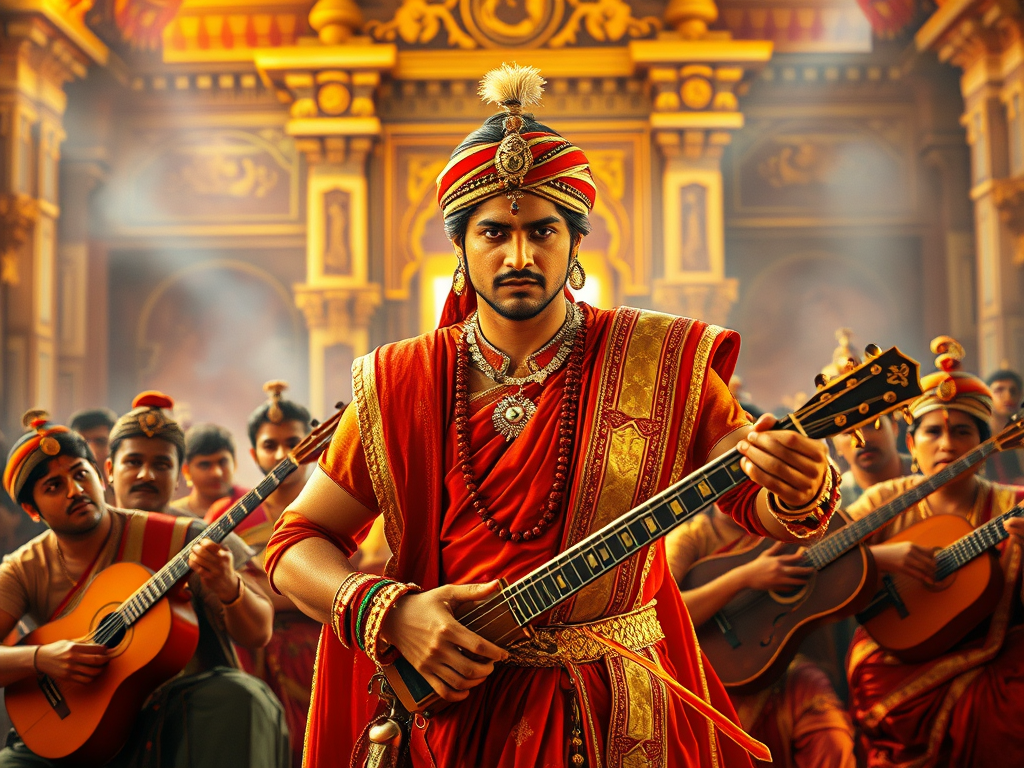
The cinematic landscape is rich with genres that evoke distinct audience expectations and experiences. Among these, the ‘epic’ and the ‘musical’ stand out as forms capable of delivering grand narratives and heightened emotional expression, respectively. This note aims to define and explore the intersection of these two genres within the field of Film Studies, delving into their theoretical underpinnings, key critical perspectives, and offering a specific focus on Indian cinema and its unique contributions to this hybrid form.
I. Defining the ‘Epic’ in Film Studies
The epic film is often immediately recognizable by its sheer scale, sweeping scope, and visual spectacle . This characteristic can manifest through significant budgetary allocations, enabling the creation of expansive sets, the employment of numerous extras, and the use of advanced visual effects to portray grand historical or mythological events . Beyond mere size, the epic genre, drawing inspiration from its classical literary counterpart, frequently centres on a heroic protagonist whose actions and journeys carry substantial weight, often influencing the destiny of a nation or a large group of people . Figures such as royalty, gladiators, military leaders of great renown, or characters from mythic tales are common subjects within this genre .
However, the definition of what constitutes an ‘epic’ film remains somewhat fluid. While it sometimes denotes a specific genre with its own set of conventions, it is also used as a broader descriptor for any film that achieves a sense of immensity, whether through its budget, running time, or the ambition of its narrative . For instance, films like How the West Was Won or East of Eden have been described as ‘epic’ primarily due to their vast settings and panoramic visual style, even if they do not strictly adhere to the typical narrative substance of classical epics focused on heroic deeds . This suggests that the term can refer both to a distinct genre and to a particular stylistic mode of filmmaking characterized by grandeur and breadth .
The historical trajectory of the epic film genre reveals its evolution alongside technological advancements and shifts in cinematic trends . Its roots can be traced back to the silent era, a period that saw the emergence of large-scale productions depicting historical, biblical, and ancient-world narratives . The 1950s and early 1960s marked a peak in the genre’s popularity, with Hollywood often collaborating with international studios to produce grand spectacles aimed at countering declining cinema attendance . Films from this era frequently featured extravagant settings, lavish costumes, expansive musical scores, and ensemble casts composed of prominent stars, often utilizing on-location filming and new cinematic technologies . The introduction of widescreen aspect ratios in the 1950s further enhanced the immersive and panoramic experience associated with epic films . While the advent of CGI has altered production methods, allowing for the creation of massive scenes without the need for thousands of extras, the core characteristics of scale and significant narrative remain central to the genre . The enduring appeal of epic films is often attributed to their capacity to attract a wide audience through their grand scale and compelling stories .
II. Theories and Key Thinkers on Epic Film
Theoretical engagement with the epic film has approached it from various angles, including genre theory and the field of historical film studies. Some scholars posit that the epic is not a rigidly defined genre but rather a composite form that draws elements from other genres such as adventure, war, or historical drama to achieve its characteristic scope and impact . From this perspective, the epic’s “bigness” stems not only from its visual scale but also from the breadth of its narrative, often encompassing events that significantly alter the course of history over extended periods . Historical epic films, in particular, are often viewed as a distinguished subgenre within the broader category of historical films, distinguished by their grand narratives, sprawling landscapes, and dramatizations of significant past events .
The connection between epic narratives and the construction of national identity and cultural memory has also been a significant area of scholarly inquiry . National epics, whether in literature or film, often play a vital role in shaping a collective identity by blending historical accounts with mythic elements and shared values . These grand narratives can serve as foundational stories that connect people to their heritage and foster a sense of unity . Epic films, especially those depicting pivotal moments in a nation’s history or celebrating heroic figures, can contribute to a country’s national brand by communicating key aspects of its culture, history, and values to both domestic and international audiences . The emotional power of these narratives allows viewers to become immersed in the story, potentially influencing their attitudes and perceptions of national identity .
Several key theorists have significantly contributed to our understanding of the epic film. Mikhail Bakhtin’s concept of “genre memory” offers a valuable framework, suggesting that epic films engage with and reinterpret older narrative forms and conventions for contemporary audiences, utilizing current cultural contexts and technologies . Genres, in this view, act as “organs of memory” for a culture, retaining past narrative patterns and making them available for present-day storytelling . Robert Burgoyne positions the epic film within the larger context of the Hollywood historical film, analysing its evolution from the silent era to the present and considering how these films reflect and shape generational changes and national mythologies . His work explores the tension between the global nature of film production and the epic’s traditional role as an expression of national aspirations . Mark C. Carnes focuses on the relationship between historical films, including epics, and the formation of historical memory . His edited volume, Past Imperfect: History According to the Movies, examines the accuracy and impact of historical representations in film, highlighting how these cinematic narratives shape public understanding of the past . Derek Elley’s work provides an earlier, yet still relevant, perspective on epic film scholarship . In The Epic Film: Myth and History, Elley distinguishes between heroic and epic narratives, tracing the journey of the epic from its literary origins to its cinematic form and emphasizing the role of spectacle as a defining characteristic of the genre . These theorists collectively provide a rich tapestry of perspectives through which to analyse the epic film, considering its historical context, its role in shaping cultural understanding, and its evolving narrative and stylistic conventions.
III. Defining the ‘Musical’ in Film Studies
The musical film genre is characterized by the seamless integration of songs performed by its characters into the narrative structure, often accompanied by dance . These musical numbers are not mere interludes but typically serve to advance the plot, deepen the development of the film’s characters, or amplify the prevailing emotional atmosphere . In some instances, however, musical sequences might function as elaborate “production numbers” that offer a temporary departure from the main storyline, providing spectacle and entertainment . The musical film, emerging as a natural progression from stage musicals following the advent of sound film technology, often distinguishes itself through the use of expansive and visually stunning background scenery and locations that would be impractical in a theatrical setting . Despite its cinematic nature, the genre frequently retains elements reminiscent of the stage, with performers sometimes engaging in song and dance as if in front of a live audience, occasionally even addressing the camera directly, blurring the lines between the diegetic world of the film and the viewing audience .
The history of the musical film is marked by a dynamic evolution and the emergence of diverse subgenres . Originating in the early 20th century with the introduction of synchronized sound, the genre quickly gained popularity, particularly during the “Golden Age” of Hollywood musicals from the 1930s to the 1950s . This era saw major studios like MGM produce lavish, star-studded musicals featuring memorable music and intricate choreography . Over time, the musical genre has incorporated a wide range of musical styles, from the Broadway and classical traditions of early musicals to the rock, pop, and contemporary genres of later periods . This adaptability has allowed the genre to remain relevant and appealing across generations. Various types of musicals have evolved, including adaptations of successful stage productions, original screen musicals written specifically for film, jukebox musicals built around previously released popular songs, and animated musicals that integrate musical elements into animated storytelling .
The musical genre possesses a unique set of characteristics and conventions that contribute to its distinct identity . Unlike other film genres where music typically serves as background enhancement, in musicals, songs and dances are integral to the storytelling process . Many musicals employ specific tropes, such as an opening number to set the tone, an “I Want” song to express a character’s desires, love ballads to develop romance, and elaborate dance numbers to convey emotions or celebrate events . The use of reprises, showstoppers, and grand finales are also common conventions that contribute to the genre’s structure and emotional impact . Furthermore, musicals often utilize fantasy sequences to visually represent characters’ inner thoughts and desires through song and dance .
IV. Theories and Key Thinkers on Musical Film
Theoretical approaches to the musical film emphasize the crucial role of music in advancing the narrative and the significance of the spectacle of performance in engaging the audience. Music in musicals performs various narrative functions, including establishing the mood and creating a sense of immersion in the story’s world . Songs can establish connections between the film and its audience, provide insights into the historical background, and expand the viewer’s understanding . Music also serves to portray emotions, create atmosphere, and underscore thematic elements . In musicals, songs can define a character’s status quo, express their desires and goals, and highlight pivotal moments in their journey . The spectacle of performance in musicals, characterized by visually striking song-and-dance sequences and elaborate choreography, is a central element that contributes to the genre’s artistic expression and its ability to captivate audiences .
The relationship between music, emotion, and audience engagement is fundamental to the musical genre . Music possesses a powerful capacity to evoke specific emotions in viewers, influencing their overall movie-watching experience . Composers and filmmakers work collaboratively to synchronize music with on-screen action, intensifying the emotional impact of scenes . Different musical elements, such as key, tempo, melody, and harmony, can be strategically employed to convey a wide range of emotions, allowing audiences to connect more deeply with the characters and their experiences . The use of leitmotifs, recurring musical themes associated with specific characters or emotions, further enhances the emotional connection and narrative depth of musical films .
Several key theorists have offered significant insights into the musical film. Rick Altman’s work centres on the structural elements of the American film musical, proposing that the romantic couple and their evolving relationship often form the core of the narrative . He also utilizes a semantic/syntactic approach to analyse the genre, examining its common traits and underlying structural organization . Jane Feuer explores the ideological underpinnings of the musical, particularly the “myths of entertainment” present in self-reflexive musicals that focus on the production of shows . She examines how these films often celebrate spontaneity, integration, and the role of the audience within the narrative . Michel Chion, while primarily known for his broader work on film sound, has contributed significantly to understanding the relationship between sound and image, concepts that are highly relevant to the analysis of musicals . His theories, such as “audio-vision,” highlight the synergistic effect of sound and image in creating meaning and emotional impact . Claudia Gorbman’s seminal work, Unheard Melodies: Narrative Film Music, delves into the narrative functions of music in film, including musicals, exploring how music operates on a subconscious level to enhance the storytelling experience and provide emotional gratification . Dudley Andrew’s contributions to film theory offer broader frameworks for understanding genre and narrative, which can be applied to the analysis of the musical film within the larger cinematic landscape . These theorists, through their diverse approaches, provide essential tools for a comprehensive understanding of the musical film genre.
V. The Confluence: Defining the ‘Epic and Musical’ in Film
The intersection of the epic and musical genres presents a compelling area of study, as both forms possess the potential for grandiosity and heightened emotional expression. A key point of convergence lies in their capacity to utilize spectacle to create a powerful and immersive experience for the audience . Epic films achieve this through their sheer scale, elaborate historical or mythological settings, and massive action sequences . Musicals, on the other hand, generate spectacle through intricate choreography, elaborate production numbers, and the dynamic movement of performers .
Music, a defining element of the musical genre, also plays a crucial role in many epic films. Sweeping orchestral scores are frequently employed to enhance the sense of scale, grandeur, and emotional weight inherent in epic narratives . This underscores the potential for a natural synergy between the two forms, where the musical elements can amplify the epic scope and emotional intensity. Epic narratives, often dealing with significant historical or mythological events, are inherently charged with heightened emotions and dramatic conflicts. The musical format offers a unique avenue for expressing these emotions and conflicts through song and dance, adding another layer of depth and resonance to the storytelling . The visual grandeur characteristic of epic settings and costumes can be further enriched by the artistry and dynamism of musical choreography, creating a truly spectacular cinematic experience.
The combination of epic and musical elements can lead to a unique form of storytelling where the vast scope and historical or mythological significance of the epic are intertwined with the expressive power and emotional depth of music . This fusion might challenge traditional genre boundaries, resulting in hybrid forms that necessitate new analytical approaches. When analysing such hybrid genres, the specific role of music warrants careful consideration. Does it primarily function to advance the plot and develop characters, as is typical of musicals, or does it serve more as a grand, overarching score that enhances the epic scale and atmosphere? The spectacle in ‘Epic and Musical’ films can also operate on multiple levels, encompassing both the visual immensity of the epic setting and the performative spectacle of the musical sequences . Ultimately, the fusion of ‘Epic’ and ‘Musical’ raises intriguing questions about genre definition, the narrative function of music, and the multifaceted nature of cinematic spectacle, offering fertile ground for further exploration within Film Studies.
VI. The ‘Epic and Musical’ from an Indian Point of View
The context of Indian cinema, particularly Bollywood and other regional film industries, offers a unique perspective on the ‘Epic and Musical’ combination. Music has long been an inseparable component of Indian cinema, with song and dance sequences seamlessly integrated across a wide range of genres . This pervasive presence of music distinguishes Indian cinema from Hollywood, where the musical often stands as a distinct genre. The practice of playback singing, where actors lip-sync to pre-recorded songs by professional singers, is also a significant aspect of Indian musical films . Furthermore, Indian cinema boasts a rich tradition of adapting mythological and historical epics for the screen, drawing upon a vast reservoir of stories and characters deeply ingrained in the cultural consciousness .
Given this unique cinematic landscape, the blending of epic themes with musical elements in Indian films appears as a natural extension of existing practices. The influence of classical Indian musical theatre and various folk traditions can be observed in many Indian musical films, contributing to their distinctive style . Mythological and historical narratives in Indian cinema frequently incorporate elaborate musical sequences that serve to depict important events, express devotional sentiments, or showcase cultural traditions through song and dance . The concept of “Masala films,” popular in India, already involves a hybrid approach, blending multiple genres such as action, comedy, romance, and music within a single film . This tradition of genre mixing provides a fertile ground for the integration of epic elements with musical conventions. The rich musical heritage of India, combined with its long-standing tradition of adapting epic narratives, creates a unique cultural context for the ‘Epic and Musical’ combination, potentially resulting in cinematic forms that exhibit distinct characteristics compared to their Western counterparts.
VII. Indian Examples of ‘Epic and Musical’ Films
Several Indian films stand out as exemplary instances of the ‘Epic and Musical’ combination, showcasing the unique ways in which Indian cinema blends grand narratives with rich musical traditions.
- Mughal-e-Azam (1960) is a landmark film in Indian cinema, a historical epic that vividly portrays the love story between Mughal Prince Salim and the court dancer Anarkali . The film’s grand scale, featuring opulent sets, elaborate costumes, and a narrative centred on royal figures and their destinies, firmly establishes its epic credentials. Interwoven throughout this historical tapestry are numerous iconic musical numbers that are not mere embellishments but are integral to the narrative, expressing the deep emotions, romantic tensions, and dramatic conflicts of the characters . The grandeur of the Mughal era is reflected not only in the film’s visual presentation but also in its rich and memorable soundtrack, making it a foundational example of the Indian ‘Epic and Musical’ .
- The Baahubali series, comprising Baahubali: The Beginning (2015) and Baahubali 2: The Conclusion (2017), represents a contemporary take on the epic with strong mythological undertones . These films are renowned for their massive scale of production, breath-taking visual spectacle, and narratives focused on heroic figures and their battles for justice and power. While not a traditional musical in the vein of Hollywood classics, the Baahubali films feature a sweeping and powerful musical score, along with several significant songs that contribute significantly to the epic atmosphere and amplify the emotional impact of key moments in the story . The grand scale and mythological elements, combined with the impactful musical component, solidify its place as a modern example of the ‘Epic and Musical’ from an Indian perspective.
- Jodhaa Akbar (2008) is another notable example of a historical epic romance, depicting the politically significant marriage alliance between the Mughal Emperor Akbar and the Rajput princess Jodhaa Bai in the 16th century . The film is characterized by its grand production design, recreating the opulence of the Mughal era, and its focus on the evolving relationship between the two central figures amidst political intrigue. The musical score, composed by the acclaimed A.R. Rahman, is an integral part of the film, serving to portray the deep emotions of the characters and providing a rich cultural context for the historical period depicted . The seamless integration of music within this epic historical narrative makes Jodhaa Akbar a compelling example of the ‘Epic and Musical’.
- Lagaan (2001) offers a unique blend of a sports drama set during the British Raj with an epic narrative of a small village challenging the colonizers through a high-stakes cricket match . While centred on a sporting event, the film’s historical context, the immense pressure and significance of the match for the entire community, and its overall grand scale qualify it as an epic. The songs, also composed by A.R. Rahman, are not merely entertaining interludes but are deeply woven into the narrative fabric, expressing the villagers’ emotions, their growing sense of unity and determination, and the cultural backdrop of the story . Lagaan stands as a distinctive example of an ‘Epic and Musical’ where the musical elements are crucial in conveying the narrative of resistance and collective heroism against a historical backdrop.
- Sri Rama Rajyam (2011) is a Telugu mythological film based on the later part of the Hindu epic Ramayana, focusing on the lives of Rama, Sita, and their sons Lava and Kusa . As a cinematic retelling of a significant and revered Indian epic, the film clearly belongs to the epic genre. A central aspect of Sri Rama Rajyam is its extensive and highly acclaimed musical score, composed by the legendary Ilayaraja . The music plays a vital role in conveying the religious and emotional depth of the narrative, enhancing the spiritual experience for the audience and underscoring the key events and sentiments of the epic tale . Sri Rama Rajyam effectively demonstrates how mythological epics in Indian cinema often heavily rely on music to enrich the narrative and resonate with the audience’s cultural and religious sensibilities.
The provided lists of Indian epic and musical films suggest numerous other potential examples that could be analysed further, including Bajirao Mastani, Padmaavat, and the classic Mother India, all known for their epic narratives and significant musical components.
Table 1: Indian Films Exemplifying the ‘Epic and Musical’ Combination
| Film Title | Year | Genre Elements | Musical Elements | Key Theorists/Concepts Relevant |
| Mughal-e-Azam | 1960 | Historical epic, royal figures, grand scale | Iconic songs integral to narrative, expressing emotions and drama | Genre theory, national identity, spectacle |
| Baahubali Series | 2015-17 | Mythological epic, heroic figures, massive scale | Sweeping score, significant songs enhancing epic atmosphere and emotional impact | Genre theory, spectacle, modern epic adaptations |
| Jodhaa Akbar | 2008 | Historical epic romance, royal figures | Strong musical component by A.R. Rahman, portraying emotions and cultural context | Genre theory, historical film studies, music and emotion |
| Lagaan | 2001 | Historical sports drama (epic scope), community heroism | Memorable songs by A.R. Rahman integral to narrative and expressing themes | Genre theory, national identity, music and narrative function |
| Sri Rama Rajyam | 2011 | Mythological epic, divine figures | Extensive devotional musical score central to religious and emotional experience | Genre theory, mythological adaptations, music and emotion |
VIII. Conclusion: Synthesis and Future Directions
This report has explored the definitions of ‘epic’ and ‘musical’ in Film Studies, examining their core characteristics, historical evolution, and the theoretical perspectives offered by key thinkers in the field. The analysis reveals that the epic genre is defined by its grand scale, sweeping scope, spectacle, and often its focus on heroic narratives with significant historical or societal impact. The musical genre, in contrast, is characterized by the integration of songs and dances into the narrative, serving various dramatic and emotional functions.
The confluence of these two genres, the ‘Epic and Musical’, represents a powerful cinematic form that leverages both visual grandeur and heightened emotional expression. The integration of musical elements within an epic framework can amplify the scale and emotional resonance of the narrative, creating a unique and immersive audience experience.
From an Indian point of view, the ‘Epic and Musical’ combination finds a particularly rich context. With a long-standing tradition of incorporating music and dance across various genres and a strong cultural connection to mythological and historical epics, Indian cinema has produced numerous films that exemplify this hybrid form. Films like Mughal-e-Azam, the Baahubali series, Jodhaa Akbar, Lagaan, and Sri Rama Rajyam demonstrate the diverse ways in which epic narratives and musical elements can be blended, often drawing upon distinct cultural and aesthetic traditions.
Further research could explore the specific ways in which cultural contexts influence the ‘Epic and Musical’ genre in different national cinemas beyond India. Examining the evolution of this hybrid form over time and across different filmmaking traditions could also yield valuable insights into the changing nature of genre conventions and audience expectations. Additionally, a deeper analysis of the narrative functions of music and spectacle within ‘Epic and Musical’ films could contribute to a more nuanced understanding of their unique storytelling capabilities.


 Literary Latitude