
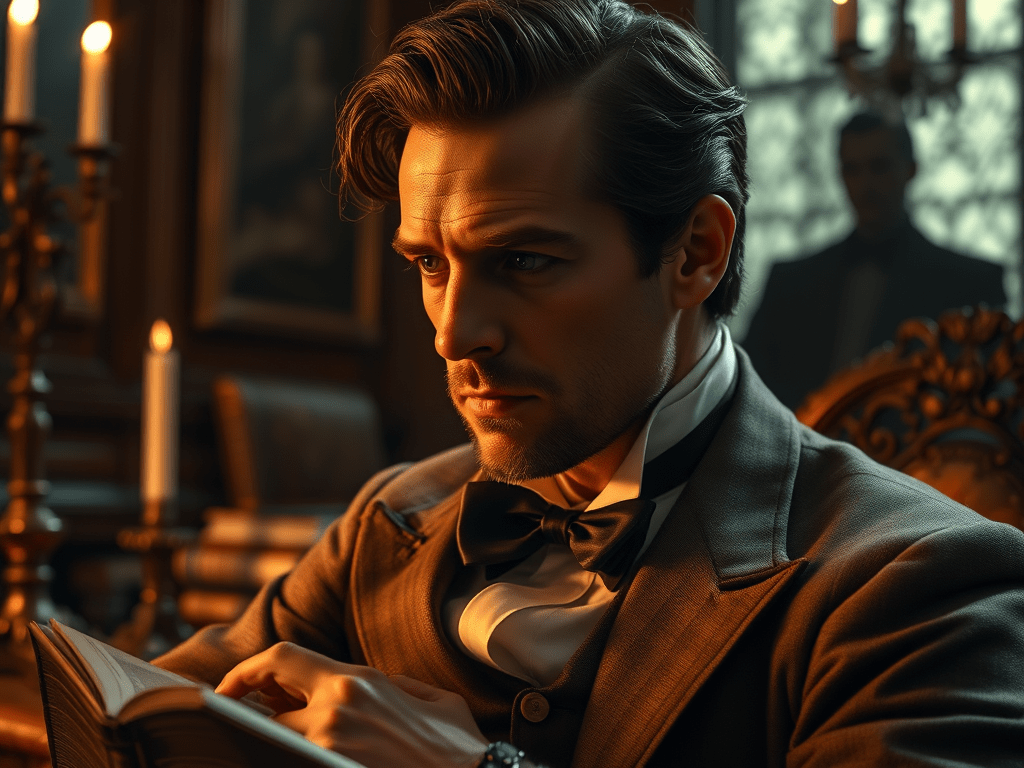
When studying Victorian poetry, particularly the works of Robert Browning, key themes emerge, such as the tension between imagination and reality. Browning’s poetic world often contrasts with Romantic ideals, where nature and imagination dominate. Instead, Browning presents a world that reflects Victorian values—complex, ambitious, and driven by a desire for exploration and conquest of new knowledge. His protagonists often share similar traits and experiences, embodying historical and intellectual dimensions. Some are depicted as clever and strong, yet their escapism distances them from realism, giving their depiction a fictional quality. In the Victorian context, this could be considered realistic given the era’s different societal spirit.
Browning is well-known for his use of the dramatic monologue, a poetic form featuring a single character who speaks throughout the poem, with a listener’s presence implied through pronouns and indirect references. In this structure, the protagonist becomes the central figure around whom the entire narrative revolves, but the listener’s role is subtly indicated. Browning’s dramatic monologues often involve the speaker addressing implied audiences, such as fellow mariners or unseen listeners.
One notable example of Browning’s dramatic monologues is “The Last Ride Together”. In this poem, the protagonist—a rejected lover—reflects on his experience with remarkable optimism. The plot centres around a man who proposes to a woman, only to have his proposal declined. While rejection typically results in disappointment and heartbreak, this protagonist maintains hope. He convinces the woman to take one final ride together, savouring the brief time they have left before their inevitable separation. This showcases Browning’s theme of enduring optimism, even in situations that would normally lead to despair. Instead of succumbing to defeat, the protagonist chooses to cherish the fleeting moment and live it to its fullest.
This sense of optimism is a defining characteristic of Browning’s heroes. Even in moments of emotional turmoil, they demonstrate resilience and an ability to find meaning in what remains. Another example of Browning’s exploration of complex relationships is seen in “Porphyria’s Lover”, where the protagonist exhibits eccentric
In “Porphyria’s Lover”, Browning presents a dark and unsettling portrayal of love and obsession. The protagonist is deeply infatuated with Porphyria, but his desire for control over her leads to a tragic outcome. When Porphyria visits him, he embraces her lovingly, but his overwhelming need to prevent her from ever leaving him drives him to a drastic action. He wraps her hair around her neck and strangles her, believing this act will preserve their love forever. In his mind, this ensures that she will remain with him eternally, as she would no longer be able to leave him—a misguided and chilling interpretation of love.
The protagonist’s actions highlight an extreme and distorted level of confidence, believing that his solution to the problem of her potential departure is justified. This solution, however, defies rationality and reflects a psychological breakdown, as the lover convinces himself that Porphyria’s death was an act of devotion rather than violence. His obsessive love suffocates her—both metaphorically and literally.
In another of Browning’s famous monologues, “My Last Duchess”, the Duke is portrayed as a manipulative, patriarchal figure with a history of controlling behaviour. The narrative centres on the Duke discussing his previous marriage with a messenger who has brought a new marriage proposal. The Duke implies, through subtle and rhetorical language, that he had his first wife murdered because she did not conform to his rigid, patriarchal expectations. His dissatisfaction with her behaviour—such as showing too much friendliness or being too easily pleased—led to her death.
The Duke’s confidence is alarming. He openly hints to the messenger that he expects his future wife to be more obedient and conform to his demands. His words suggest that if she does not, she might face the same fate as his previous wife. Despite these chilling confessions, the Duke is confident that the marriage proposal will proceed. He emphasizes the wealth he gained from his last marriage by showing the messenger the dowry and possessions accumulated from his first wife, subtly indicating that he expects even more wealth
Robert Browning, through his dramatic monologues, presents an optimistic and complex world where beauty, intellect, and emotion intersect, often contrasted with darker psychological undertones. Unlike poets such as Matthew Arnold, who adopt a more pessimistic tone about the human condition, Browning’s world remains vibrant and layered. His monologues dive into the psychology of characters, revealing their thoughts, emotions, and motivations indirectly through their speech. The structure of the dramatic monologue allows readers to explore the character’s conscious and unconscious thoughts, with Browning carefully revealing their inner conflicts and desires without explicitly stating them.
In “My Last Duchess”, the setting is Ferrara, and the speaker is a Duke who is addressing a messenger about a marriage proposal. The Duke’s use of demonstrative pronouns, such as “that,” draws attention to the portrait of his deceased wife, the Duchess, painted on the wall. From this, it becomes clear that she is no longer alive, and the painting is all that remains of her. The Duke refers to the portrait as a “piece of wonder,” marvelling at how lifelike it appears, almost as though the Duchess herself were still present. This admiration, however, carries an ominous tone, as the Duke’s description hints at his control over her even in death.
The Duke’s clever and subtle language is key to understanding the psychological depth of the poem. He states that the portrait was painted quickly, capturing her lively expression in a single day. The Duke then reveals that he controls access to the painting, saying, “Will it leave you sit and look at her?”—a request framed politely but underscoring.
In “My Last Duchess”, the Duke emphasizes his absolute control over the memory of his late wife, symbolized by her portrait. He highlights that only he has the authority to reveal the painting to others, stating that no stranger has seen it except for the messenger, Fra Pandolf, and himself. The Duke tightly controls access to the painting by drawing the curtains, reinforcing his dominance even after his wife’s death. The portrait embodies the continuity of life and the lingering presence of the Duchess, but it is a presence restricted and manipulated by the Duke.
The Duke’s possessiveness extends to how he describes the Duchess’s glance in the painting. He notes that the glance is so captivating and lifelike that those who see it are compelled to ask how such an expression came to be captured. However, only he—the Duke—has the right to reveal the portrait and answer such questions. The line “since none puts by the curtains I have drawn for you, but I” demonstrates that he alone decides who can look upon her and, by extension, who can have access to her memory and beauty.
The Duke speculates that others might wonder about the meaning behind the Duchess’s expression—whether it reflects affection, innocence, or perhaps something more—but no one dares to directly ask him. His authoritative nature creates an environment of silence and fear. Even though many would want to inquire about the Duchess’s lively and earnest gaze, they refrain due to the Duke’s intimidating demeanour. The implication is that the Duchess’s warm and natural disposition, which once charmed everyone, was a source of jealousy and frustration for the Duke. He viewed her openness and friendliness as a threat to his control, leading to the tragic outcome hinted at in the poem.
Browning’s language here reveals the Duke’s psychological complexity. His use of phrases like “dust” (meaning “dare”) highlights his belief that very few people would have the courage to challenge him about the circumstances surrounding his wife’s death or the meaning behind her lifelike expression. The Duke’s possessiveness, combined with his need to dictate how others remember the Duchess, paints a picture of a man driven by pride, control, and a distorted sense of love.
The Duke, in “My Last Duchess”, reflects on the time when his wife was alive, revealing key aspects of her character and his perception of her behaviour. He acknowledges that the Duchess was naturally friendly, warm, and open-hearted. Her joy was genuine, and she treated everyone with kindness and affection, showing no favouritism between her husband and strangers. This openness, however, became a point of contention for the Duke, as he saw her lack of exclusivity in her affection as a threat to his control and dignity.
He mentions Fra Pandolf, the painter who created the portrait, and recalls a moment during the painting process when the Duchess’s mantle (the clothing she wore) covered her wrist. The Duke notes that Fra Pandolf remarked on how the fabric rested heavily on her wrist, subtly indicating that even during the creation of the painting, the Duchess’s body was concealed. The Duke ensured that her body, including her hands, was fully covered, and only her face was visible in the final portrait. He exercised strict control over how much of her physical form could be revealed.
When describing the painting, the Duke says, “the faint half blush that dies along her throat,” indicating that the liveliness and blush of her smile were limited. He metaphorically “controlled” the painting by ensuring that the expression did not extend beyond her face, symbolizing his desire to limit her natural charm. The blush fading along her throat represents the containment of her joyful, expressive nature. The Duke did not allow the painter to capture the full spirit of his wife, and this restriction is symbolic of his larger attempt to control her in life.
The Duke’s description of his late wife in “My Last Duchess” reveals his deeply possessive and controlling nature, disguised under the pretence of admiration. He claims that his wife’s joy and generosity were signs of her pure and kind heart. However, beneath this seemingly complimentary tone lies a harsh critique. The Duke subtly criticizes her for being “too soon made glad” and “too easily impressed,” suggesting that her capacity to find joy in simple things and her lack of exclusivity in affection were flaws in his eyes.
He describes her as someone who found pleasure in everything—whether it was her husband’s attention, the beauty of a sunset, or an ordinary gift, such as cherries given by “some officious fool” who broke them from an orchard. The Duke implies that his wife treated all gestures with the same level of gratitude and joy, making no distinction between grand gestures from her husband and small acts of kindness from others. To the Duke, this was unacceptable, as he believed that his status as her husband should have set him apart from others in her eyes.
His use of phrases like “my favour at her breast” alongside mentions of trivial pleasures like “the dropping of daylight in the west” or a “bough of cherries” reveals his dissatisfaction with her egalitarian affection. The Duke expected exclusivity and reverence for his gestures, but instead, he perceived her equal enjoyment of everything as a form of disrespect. His clever language initially makes it seem as though he is praising her for her warmth and courtesy, but upon closer examination, it becomes clear that he is condemning her for not adhering to his rigid standards.
This passive-aggressive tone is a hallmark of Browning’s dramatic monologue, where the character unknowingly reveals more about their flaws and inner turmoil than they intend. The Duke’s criticism of his wife’s inability to discriminate between significant and trivial gestures ultimately reflects his need for control and dominance, which likely led to the Duchess’s untimely demise. Her inability
In “My Last Duchess”, the Duke of Ferrara continues to reveal his jealousy and dissatisfaction with his late wife’s behaviour. He reflects on how the Duchess found joy and excitement in everything—from riding her white mule around the terrace to interacting with strangers. Her feelings of love, sympathy, and excitement were indiscriminate, and this inability to prioritize the Duke above others was what he perceived as problematic. His inability to accept her equal affection for people, objects, and experiences fuelled his jealousy.
The Duke criticizes the Duchess for treating all gestures with the same level of appreciation, suggesting that she did not distinguish between his prestigious position and the simple gifts given by ordinary people. He remarks that “all and each would draw from her the approving speech,” meaning she would respond to any kindness with gratitude and approval, often smiling or blushing. This lack of distinction between significant gestures and trivial ones deeply offended the Duke, as he believed that his noble status and the legacy of his 900-year-old family deserved special acknowledgment.
He specifically highlights how she thanked him for his “gift of a 900 years old name” in the same way she thanked someone who offered her a simple gift like cherries. The Duke expected his status and legacy to be revered and valued more than anything else, but the Duchess’s equal gratitude diminished the importance of his position in her eyes. The fact that she placed his noble heritage on the same level as minor gestures was intolerable to him, showcasing the depth of his possessiveness.
The historical context behind the poem connects the Duchess to Lucrezia de’ Medici, a historical figure whose life and mysterious death Browning may have drawn upon. The Duke’s pride and control over his family’s legacy reflect the patriarchal and hierarchical values of the time, where women were expected to show unwavering loyalty and deference to their husbands.
The Duke goes on to question who would dare to blame his wife for her behaviour. He acknowledges that publicly confronting or controlling her would be seen as excessive or overbearing, and he does not want to risk damaging his reputation by appearing tyrannical. This is part of his calculated nature—he hides his true cruelty under the guise of courtesy and respect. However, through his subtle criticisms and controlling demeanour, it becomes clear that his possessiveness and jealousy ultimately led to the Duchess’s demise.
In “My Last Duchess”, the Duke continues to reveal the depth of his jealousy and possessiveness while masking it under the guise of restraint and politeness. He claims that he never explicitly told the Duchess what behaviour upset him or what boundaries she had crossed. Although he was deeply hurt and jealous of her openness and affection for others, he remained silent, choosing instead to observe, compare, and resent her quietly. His refusal to communicate his feelings created a situation where the Duchess was unaware of his disapproval, leading her to continue her behaviour.
The Duke pretends to lack the skill to express his feelings clearly, stating, “even had your skill in speech, which I have not.” However, this is an ironic statement, as the entire monologue demonstrates his mastery of speech and manipulation. He subtly implies that if he had the ability to communicate directly, he could have corrected her behaviour. However, this is a deceptive admission, as his ability to control the narrative and his surroundings is clear throughout the poem.
He expected the Duchess to recognize, on her own, what behaviour displeased him and to correct herself without him having to say a word. According to the Duke, she should have instinctively known the limits of what was acceptable, understood her husband’s silent disapproval, and adjusted her actions accordingly. He criticizes her for failing to do so, indicating that he believed a “good” wife would have been able to sense and modify her behaviour without any explicit guidance.
The Duke’s statement, “nor plainly set her wits to yours forsooth and made excuse,” implies that he found her attempts to please others unnecessary and inappropriate. He wanted her to reserve her charm, joy, and gratitude solely for him. In his view, her failure to recognize this expectation was a significant flaw.
Despite his outward restraint, the Duke’s words reveal a calculated approach. He neither communicated his discontent directly nor allowed the Duchess to sense it. This passive-aggressive behaviour demonstrates that he was not interested in resolving the issue through understanding or compromise. Instead, his silence served as a prelude to the drastic action he took to permanently end the situation.
The Duke’s behaviour exemplifies the toxic power dynamics of control and dominance. By withholding his emotions and not giving the Duchess a chance to understand his perspective, he ensured that her fate was sealed. His portrayal of himself as a “good” and patient husband is deeply ironic, as his silence ultimately led to her downfall. The poem leaves readers with the chilling realization that his perceived restraint was, in fact, a calculated strategy of control.
In “My Last Duchess”, the Duke of Ferrara reflects on how his inability to control his wife’s behaviour during her life drove him to take extreme measures to assert dominance. He admits that he chose “never to stoop,” meaning he refused to lower himself by openly confronting her or asking her to change. His pride and sense of superiority prevented him from expressing his dissatisfaction directly, as he believed doing so would make him appear insecure or weak. To the Duke, surrendering emotionally or showing vulnerability would damage his authority and image as a powerful, noble figure.
The Duke highlights that the problem wasn’t his wife smiling at him—she did that often—but that she smiled at others with the same warmth and affection. He viewed her inability to reserve this expression of joy solely for him as disrespectful. The fact that she treated everyone with the same kindness and approval, regardless of their status, deeply angered him and fuelled his jealousy.
Eventually, the Duke says, “I gave commands; then all smiles stopped together.” This cryptic but chilling statement strongly implies that he ordered her murder. The ambiguity of the phrase “gave commands” is intentional, as the Duke does not explicitly confess to the crime, instead hiding behind his refined and composed demeanour. By phrasing it this way, he avoids direct responsibility while still making it clear that he had the power to end her life. This choice of words reflects the Duke’s manipulative nature—he presents himself as a “good” and respectable husband who acted out of necessity, not malice.
With the Duchess gone, the Duke can now control her entirely through the lifelike portrait. The painting stands as a symbol of his ultimate dominance, where she appears “as if alive,” but is forever silent and obedient. He no longer has to worry about her smiling at others or disregarding his expectations.
As the monologue nears its end, the Duke politely but firmly directs the messenger to join the company downstairs, signalling that the marriage negotiations are to continue. His polite phrasing, “Will it please you rise, sir?” is a subtle yet authoritative command, reflecting his regal position.
In “My Last Duchess”, the Duke’s final lines reveal his complete control over his wife’s image, legacy, and memory. By keeping her behind a curtain, he ensures that she can only “smile” or “look” at someone when he allows it. In death, she is as he wanted her to be in life: completely obedient, confined, and only accessible on his terms. The power to draw the curtain and decide who can see the painting symbolizes the Duke’s ultimate dominance, which he was unable to achieve while she was alive.
The discussion shifts toward the marriage negotiations, where the Duke expresses confidence in the generosity of the Count, whose daughter is to be his second wife. The Duke implies that any demands for a dowry will be easily met, as the Count is described as kind-hearted and unlikely to reject his requests. This reflects another aspect of the Duke’s character—his transactional view of marriage, where wealth and status are as important as control and obedience. He mentions that the Count’s daughter is a good girl, but his emphasis on dowry and control implies that her behaviour will be closely monitored to prevent the issues he faced with his previous wife.
In “My Last Duchess”, Robert Browning masterfully explores the Duke’s manipulative and possessive nature, hidden beneath a veneer of politeness and refinement. The Duke comes across as a calm, composed gentleman who seems to be a “victim” of his wife’s supposed misconduct. However, the poem subtly reveals that this is a carefully constructed narrative designed to shift blame away from himself and onto his late wife. Through clever language and indirect admissions, the Duke presents the Duchess as characterless, overly friendly, and incapable of understanding the boundaries he expected her to follow.
Throughout the monologue, the Duke portrays himself as patient and tolerant. He implies that he gave the Duchess multiple chances to correct her behaviour but that she failed to recognize or respect the limits he silently imposed. His assertion that “she missed the mark” and “crossed the limits” is used to justify his drastic actions. He did not express his disapproval directly, nor did he openly confront her. Instead, he observed her, silently accumulated resentment, and ultimately decided that her death was the only way to protect the dignity and legacy of his 900-year-old noble family.
The line “I gave commands; then all smiles stopped together” confirms that the Duke ordered her death, though he carefully avoids taking direct responsibility. By framing it as a necessary act to preserve his family’s honour, the Duke disguises his crime as a noble duty. His calculated explanation is meant to appear logical, even reasonable, though the underlying truth reveals a man consumed by jealousy, pride, and the desire for total control.
The poem ultimately highlights themes of power, patriarchy, and the dangers of unchecked authority. The Duke’s control over the Duchess’s image in the portrait, his emphasis on material wealth through the dowry, and his ability to rewrite the narrative to favour himself all underscore his “criminal psychology.” Browning critiques the oppressive social and gender dynamics of the time, illustrating how women were often objectified and controlled within patriarchal structures.
As the monologue concludes, the Duke’s attention shifts to the dowry and future marriage, indicating that his obsession with control continues. His view of relationships as transactional—cantered on wealth and obedience—shows that he values dominance over emotional connection or love. The final image of the rare statue of Neptune taming a seahorse serves as a metaphor for the Duke’s worldview: domination, control, and the belief that women, like the seahorse, must be tamed to fit into his rigid expectations.
The poem leaves readers reflecting on the dangers of power and manipulation, as the Duke’s charm and civility mask a dark and dangerous mind capable of justifying murder in the name of honour and respectability.



 Literary Latitude