
Introduction
Dalit folk cultures in India are an integral part of the country’s cultural heritage, representing the lived experiences, struggles, and aspirations of Dalit communities. These cultures have played a crucial role in shaping social justice movements in India, providing a platform for Dalit voices, fostering solidarity, and inspiring resistance against oppression1. They are not monolithic but rather a rich mosaic of traditions, practices, and beliefs that vary across regions and communities. This article aims to provide a comprehensive overview of Dalit folk cultures in India, exploring their variety, diversity of practices, heterogeneity, and region-specific characteristics.
Historical Context and Origin of Dalit Communities in India
To understand Dalit folk cultures, it is essential to examine the historical context and origin of Dalit communities in India. The term “Dalit” refers to those who were historically considered “untouchable” and excluded from the fourfold varna system of Hinduism2. This system, with its origins in Brahminical Hinduism, is deeply entrenched in Indian society, shaping values, attitudes, and relationships2. Dalits faced severe social, economic, and religious discrimination, and their cultural expressions were often marginalized and suppressed2. The roots of Dalit oppression can be traced back to the origins of the caste system in Hindu religion, as reflected in the Manusmriti, a sacred Hindu text dating from the second century BCE4.
While the exact origins of Dalit communities remain debated, scholars suggest that they may have emerged from indigenous populations who were incorporated into the caste system at its lower rungs5. These communities were often assigned tasks considered polluting or impure, leading to their social exclusion and marginalization2. The concept of “untouchability” is deeply rooted in Hindu religious and cultural values, with the belief that the touch, shadow, or even voice of Dalits could be polluting5. This discrimination manifested in various forms, including segregation in housing, prohibitions against inter-caste marriage, and restrictions on accessing public facilities like wells and places of worship2.
Who are the Dalit People in India?
Dalit people in India constitute a diverse group of communities that have historically faced discrimination and oppression based on their caste. They are often referred to as “untouchables” or “Scheduled Castes.” 3 The term “Dalit,” meaning “broken” or “oppressed,” was adopted by these communities to symbolize their struggle for change and eradication of centuries-old oppression2. Dalits are estimated to comprise around 166.6 million people in India and are spread across various regions and religious affiliations6. Despite constitutional abolishment of caste-based discrimination, Dalits continue to experience social exclusion and marginalization in many parts of India7.
Dalit Folk Culture Practices and Traditions
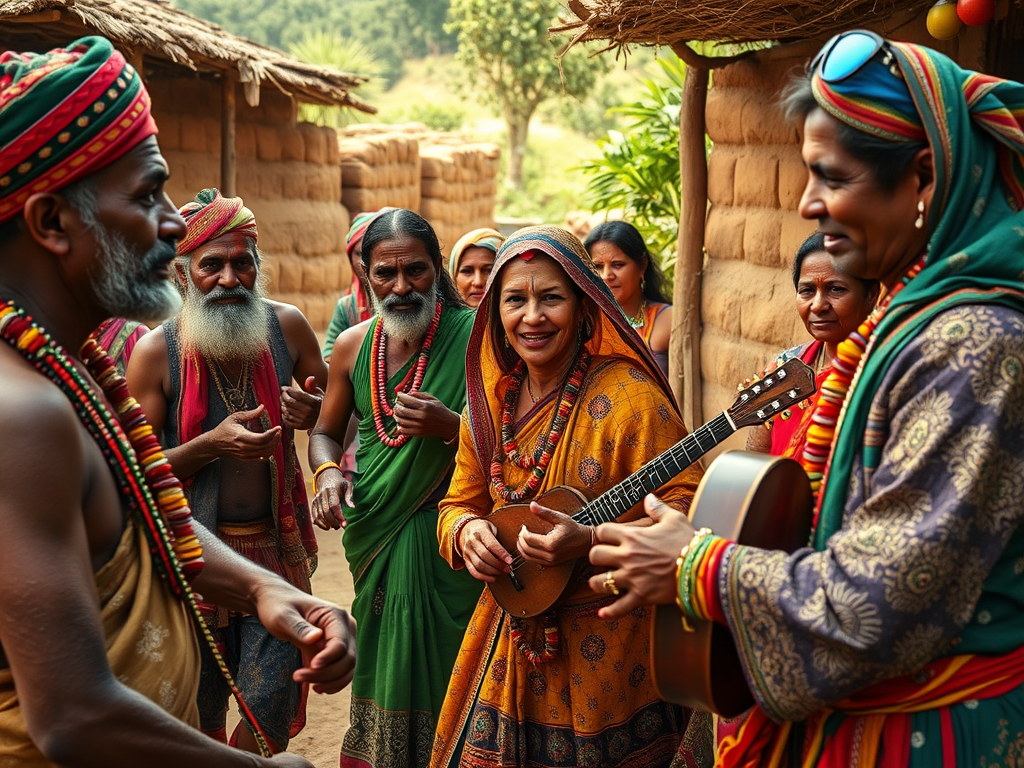
Dalit folk cultures encompass a wide range of practices and traditions that reflect the communities’ unique identities and experiences. These practices are often intertwined with their daily lives, labor, and struggles1. Resilience and resistance are central themes in Dalit folk cultures, expressed through their art, music, dance, and folklore8. Dalit folklore, including oral stories, songs, and rituals, plays a crucial role in transmitting history, values, and resistance9. It serves as a repository of Dalit history and a means of transmitting cultural knowledge across generations10. For example, the story of Dina-bhadri, a folk hero of the Mushahar caste, narrates the bravery of two brothers who defeated armies of higher castes, highlighting the community’s resilience and resistance against oppression10.
Some prominent values found in Dalit folklore include equality, social justice, community, and solidarity9. These values are often expressed through stories of marginalized heroes who rise against oppressive systems, emphasizing the importance of collective action and unity in the struggle for liberation9.
Dalit Folk Culture Beliefs
Dalit folk culture beliefs are often rooted in the community’s close relationship with nature and their experiences of oppression8. They often challenge the dominant cultural narratives and values that perpetuate caste hierarchies9. For instance, while dominant Hindu narratives often associate the serpent with chaos and destruction, Dalit culture subverts this symbolism, portraying the serpent as a protector and an agent of change, symbolizing rebellion and transformation8. Dalit beliefs emphasize the interconnectedness of all beings and the importance of collective liberation11.
Diversity in Dalit Folk Cultures in India
Dalit folk cultures in India exhibit significant diversity, reflecting the varied experiences and influences of different regions and communities3. This diversity is manifested in various forms of expression, including art, music, dance, and folklore12. Dalit literature, for example, has emerged as a powerful voice for Dalit identity and resistance, challenging the dominant narratives and reclaiming their cultural space13. Authors like Baburao Bagul and Namdeo Dhasal have used their writing to depict the lives of the marginalized and downtrodden, sparking a literary movement that has significantly impacted both the literary and political spheres13.
Dalit Folk Music
Dalit folk music is an integral part of Dalit cultural expression, serving as a means of protest, storytelling, and assertion of identity14. Dalit musicians often use their music to address social injustices, share their experiences, and inspire change15. In Maharashtra, Dalit shahirs, singers, and writers create content reflecting Ambedkarite ideology and challenging caste oppression14. Different regions have their own unique styles and traditions of Dalit folk music, reflecting the diversity of Dalit communities16. For example, in Tamil Nadu, the parai drum, traditionally associated with the Paraiyar Dalit caste, is used to express protest and resistance through music14.
Dalit Folk Dance
Dalit folk dance is closely connected to labor, community rituals, and resistance17. Unlike classical dance forms, which are often associated with elite groups, Dalit dance is a communal experience rooted in collective action and the rhythms of daily life18. For example, the Kummi dance, performed by Dalit communities in Tamil Nadu and Andhra Pradesh during harvest festivals, involves synchronized rhythmic steps that highlight the collective strength of the community17. Dalit dances often express the struggles, celebrations, and solidarity of the community19.
Dalit Theatre and Performing Arts
Dalit communities have a rich tradition of theatre and performing arts, which serve as powerful mediums for expressing their identity, history, and resistance. 1 Forms like Tamsha and Lavni, traditionally performed by Dalit communities to entertain upper-caste audiences, have evolved to incorporate Ambedkarite themes and social commentary1. These performances often challenge caste hierarchies, depict the struggles of Dalit communities, and celebrate their resilience.
Dalit Art Forms
Dalit art forms encompass a wide range of expressions, including painting, sculpture, and visual arts20. Dalit artists often use their art to challenge social norms, depict their lived experiences, and assert their identity21. For example, the Godna paintings, a tattooing art form among Dalit women, served as a way to adorn themselves and question Brahminical ideas of purity and cleanliness22. Dalit art forms often draw inspiration from their close relationship with nature and their struggles against oppression22.
Heterogeneity of Dalit Folk Cultures in India
Dalit folk cultures in India are characterized by heterogeneity, reflecting the diverse influences of different regions and communities23. This heterogeneity is evident in the variations in practices, traditions, and beliefs across different Dalit groups24. The interaction between Dalit and non-Dalit cultures has also contributed to the heterogeneity of Dalit folk cultures1. The concept of “cultural heterogeneity” refers to the presence of diverse cultural groups within a society, each with its own distinct traditions and practices23. In the context of Dalit folk cultures, this heterogeneity arises from the interaction between different Dalit communities, as well as the influence of various regional and religious traditions23. For example, the cultural practices of Dalits in Maharashtra may differ from those in Bihar or Tamil Nadu, reflecting the unique cultural contexts of these regions.
Regional Variations of Dalit Folk Cultures in India
Dalit folk cultures exhibit significant regional variations, reflecting the unique social, economic, and cultural contexts of different regions3. These variations can be seen in the different forms of expression, beliefs, and practices among Dalit communities across India.
| Caste | Region | Cultural Practices | Beliefs |
|---|---|---|---|
| Paswans (Dusadh) | Bihar | Walking on fire, celebrating Chauharmal as a folk hero | Consider themselves protectors of Hinduism, believe in their origin from the sweat of Parashuram |
| Musahars | Bihar | Celebrate Dina Bhadri as a folk hero | Believe their ancestors migrated to Bihar to protect temples during Muslim invasions |
| Pasis | Uttar Pradesh | Rearing pigs | Consider themselves saviors of upper-caste Hindus, believe pigs are anathema to Muslims |
| Mahars | Maharashtra | Developed Satyashodhak jalsas (street theater with poetry) |
For example, in Bihar, Dalit communities have a strong martial tradition, and their folk tales often portray them as protectors of Hinduism25. The Paswans, a prominent Dalit caste in Bihar, follow rituals like walking on fire to demonstrate their valor and associate themselves with the martial tradition25. In Maharashtra, Dalit cultural expressions are closely linked to the anti-caste movement and the legacy of Dr. B.R. Ambedkar26. The Mahars, a Dalit community in Maharashtra, developed Satyashodhak jalsas, a form of street theater with poetry, to express their resistance and advocate for social change15.
The Role of Dalit Women in Preserving and Transmitting Folk Cultures
Dalit women play a vital role in preserving and transmitting folk cultures within their communities25. They are often the keepers of traditional knowledge, passing down stories, songs, and rituals to younger generations. In many Dalit communities, women are actively involved in folk performances, such as singing, dancing, and storytelling. They also play a crucial role in maintaining cultural practices related to festivals, rituals, and everyday life.
The Influence of Buddhism on Dalit Folk Cultures
Buddhism has had a significant influence on Dalit folk cultures in India, particularly after Dr. B.R. Ambedkar’s conversion to Buddhism in 19563. Ambedkar’s embrace of Buddhism as a means of social and spiritual liberation resonated with many Dalits, leading to mass conversions and the development of a distinct Dalit Buddhist movement3. This movement has influenced Dalit folk cultures by promoting values of equality, non-violence, and social justice. Buddhist themes and iconography have also been incorporated into Dalit art, music, and literature.
The Use of Visual Symbols and Iconography in Dalit Folk Cultures
Visual symbols and iconography play a significant role in Dalit folk cultures, serving as expressions of identity, resistance, and cultural memory26. These symbols often draw from nature, mythology, and historical figures. For example, the image of the Buddha, the dhol drum, and portraits of Dr. B.R. Ambedkar are commonly used in Dalit art and visual expressions26. These symbols represent the community’s aspirations for liberation, equality, and social justice.
Impact of Different Regions and Communities on Dalit Folk Culture
Different regions and communities have had a significant impact on the development of Dalit folk culture6. The interaction between Dalit and non-Dalit cultures, as well as the influence of various religious traditions, has shaped the diversity of Dalit folk expressions27. Cultural imperialism, particularly from dominant caste groups, has led to the suppression and appropriation of Dalit cultural expressions27. However, Dalit communities have resisted this through their own cultural practices and narratives, reclaiming their cultural identity and asserting their right to self-expression.
For example, the introduction of Islam and Christianity to India led to conversions among some Dalit communities, influencing their cultural practices and beliefs26. This interaction with different religious traditions has contributed to the heterogeneity of Dalit folk cultures, adding new layers of meaning and expression.
Academic Research Papers on Dalit Folk Cultures in India
Academic research on Dalit folk cultures in India has grown in recent years, shedding light on the diversity, heterogeneity, and regional variations of these cultures26. This research has been crucial in understanding the complexities and nuances of Dalit traditions, challenging dominant narratives, and giving voice to marginalized communities. Scholars have explored various aspects of Dalit folk cultures, including their historical roots, social significance, and contemporary challenges28. For example, research has examined the role of folklore in preserving Dalit history and identity, the impact of cultural imperialism on Dalit traditions, and the challenges faced by Dalit folk artists in gaining recognition and accessing resources28. These research papers provide valuable insights into the complexities and nuances of Dalit folk cultures29.
Books on Dalit Folk Cultures in India
Several books have been published on Dalit folk cultures in India, offering detailed analyses and perspectives on these traditions30. These books explore various aspects of Dalit folk cultures, including their history, practices, beliefs, and challenges31. They provide valuable resources for understanding the richness and diversity of Dalit folk cultures32. Notable books in this field include Khairlanji: A Strange and Bitter Crop by Anand Teltumbde, Haunted by Fire: Essays on Caste, Class, Exploitation and Emancipation by Mythily Sivaraman, and The Gender of Caste: Representing Dalits in Print by Charu Gupta30.
Documentaries on Dalit Folk Cultures in India
Documentaries have also played a crucial role in raising awareness and understanding of Dalit folk cultures in India33. These documentaries often explore the challenges faced by Dalit communities, their struggles for equality, and their cultural expressions34. They provide a visual and narrative platform for Dalit voices and experiences35. Impactful documentaries like “India Untouched” by Stalin K., “Jai Bhim Comrade” by Anand Patwardhan, and “Caste on the Menu Card” by students of the Tata Institute of Social Sciences have shed light on various aspects of caste discrimination and Dalit resistance33.
Challenges and Issues Faced by Dalit Folk Cultures in India
Despite their richness and diversity, Dalit folk cultures in India continue to face various challenges and issues9. These include social discrimination, economic marginalization, cultural appropriation, and the impact of globalization and modernization6. Dalit women, in particular, face unique challenges, including sexual violence and exclusion from development policies and programs23. Globalization and modernization have presented both opportunities and challenges for Dalit folk cultures. While these forces have led to increased awareness and recognition of Dalit issues, they have also resulted in the commodification and appropriation of Dalit traditions36.
Dalit folk artists often face challenges in gaining recognition and accessing resources20. They may lack access to formal training, have limited opportunities to showcase their work, and experience economic marginalization. Despite these challenges, Dalit folk cultures continue to thrive as expressions of identity, resistance, and cultural resilience.
Conclusion
Dalit folk cultures in India represent a vibrant and diverse tapestry of traditions, practices, and beliefs that have evolved over centuries. This article has explored the variety, diversity of practices, heterogeneity, and region-specific characteristics of Dalit folk cultures. It has examined the historical context of Dalit communities in India, their origins, and the challenges they have faced. The article has also analyzed the impact of different regions and communities on the development of Dalit folk cultures, highlighting the unique expressions of art, music, dance, and folklore that have emerged.
These cultures are characterized by their close connection to nature, their emphasis on community and solidarity, and their commitment to resistance and liberation. They have played a crucial role in shaping social justice movements in India, providing a platform for Dalit voices and inspiring resistance against oppression. Despite facing challenges like social discrimination, economic marginalization, and cultural appropriation, Dalit folk cultures continue to evolve in contemporary India, adapting to new challenges while preserving their core values and traditions. By examining the heterogeneity and regional variations of Dalit folk cultures, this article has aimed to provide a comprehensive understanding of their significance in shaping Dalit identity and resistance.
Works cited
1. Cultural Practices in the Dalit Movement – Aura | Monthly e Magazine, accessed on February 1, 2025, https://auramag.in/cultural-practices-in-the-dalit-movement/
2. Caste and the Dalits: An Introduction – Global Ministries, accessed on February 1, 2025, https://www.globalministries.org/resource/caste-and-the-dalits-an-introduction/
3. Dalit – Wikipedia, accessed on February 1, 2025, https://en.wikipedia.org/wiki/Dalit
4. minorityrights.org, accessed on February 1, 2025, https://minorityrights.org/communities/dalits/#:~:text=Historical%20context,from%20the%20second%20century%20BCE.
5. Origin and Development of Dalit Community – International Journal Corner, accessed on February 1, 2025, https://www.internationaljournalcorner.com/index.php/ijird_ojs/article/download/134460/93583/325003
6. Dalits in India – Minority Rights Group, accessed on February 1, 2025, https://minorityrights.org/communities/dalits/
7. How Dalit People Are Overcoming Discrimination in India – Open Society Foundations, accessed on February 1, 2025, https://www.opensocietyfoundations.org/voices/how-dalit-people-are-overcoming-discrimination-in-india
8. The Symbolism in Dalit Culture: An Insightful Overview – Philosophy Institute, accessed on February 1, 2025, https://philosophy.institute/dalit-philosophy/dalit-culture-symbolism-overview/
9. Core Values in Dalit Folklore: A Foundation for Liberation – Philosophy Institute, accessed on February 1, 2025, https://philosophy.institute/dalit-philosophy/core-values-dalit-folklore-liberation/
10. Caste (hi)stories among Dalits – Éditions de l’École des hautes études en sciences sociales, accessed on February 1, 2025, https://books.openedition.org/editionsehess/26467
11. Unit 2 Dalit Folklore and Cultural Expressions – eGyanKosh, accessed on February 1, 2025, https://www.egyankosh.ac.in/bitstream/123456789/35253/1/Unit-2.pdf
12. Intersecting Dalit and Cultural Studies: De-brahmanizing the Disciplinary Space1, accessed on February 1, 2025, https://journals.library.brandeis.edu/index.php/caste/article/download/177/38/708
13. Diversity in the Stacks: Dalit Literature | Penn Libraries, accessed on February 1, 2025, https://www.library.upenn.edu/news/diversity-stacks-dalit
14. Dalit music – Wikipedia, accessed on February 1, 2025, https://en.wikipedia.org/wiki/Dalit_music
15. The Cultural Appropriation of Dalit Music – The Juggernaut, accessed on February 1, 2025, https://www.thejuggernaut.com/cultural-appropriation-dalit-music
16. Tamil Folk Music as Dalit Liberation Theology – Indiana University Press, accessed on February 1, 2025, https://iupress.org/9780253056771/tamil-folk-music-as-dalit-liberation-theology/
17. Celebrating Dalit Contributions to Indian Music and Dance – Philosophy Institute, accessed on February 1, 2025, https://philosophy.institute/dalit-philosophy/dalit-contributions-indian-music-dance/
18. Pakkanar Kali and Mudiyattam: Celebration and Resistance in the Folk Art Forms of South Kerala | Sahapedia, accessed on February 1, 2025, https://www.sahapedia.org/pakkanar-kali-and-mudiyattam-celebration-and-resistance-folk-art-forms-south-kerala
19. Dance Isn’t Immune to Casteism. Acknowledging the altered history of… | by Aneesha Johnson | ILLUMINATION | Medium, accessed on February 1, 2025, https://medium.com/illumination/dance-isnt-immune-to-casteism-65155743c35f
20. http://www.surajyengde.com, accessed on February 1, 2025, https://www.surajyengde.com/wp-content/uploads/2023/11/DALIT_ART.pdf
21. Dalit Art: An Endeavour In Exploring Notions Of Caste Boundaries – Feminism in India, accessed on February 1, 2025, https://feminisminindia.com/2020/05/14/dalit-art-endeavour-exploring-notions-boundaries/
22. AZAAD AWAAZ: DALIT ART AND REPRESENTATION – UNDERSTANDING RESISTANCE, accessed on February 1, 2025, https://nickledanddimed.com/azaad-awaaz-dalit-art-and-representation-understanding-resistance/
23. Cultural Heterogeneity and Exclusion in India – Mainstream Weekly, accessed on February 1, 2025, https://www.mainstreamweekly.net/article661.html
24. Caste, Culture, Continuity, and Change: a study of Dalit Priests of Telangana – ARC Journals, accessed on February 1, 2025, https://www.arcjournals.org/pdfs/ijhcs/v8-i1/5.pdf
25. Dalits in Bihar – Wikipedia, accessed on February 1, 2025, https://en.wikipedia.org/wiki/Dalits_in_Bihar
26. DALIT CULTURAL ASSERTION AND ICONOGRAPHY: A CRITICAL STUDY OF TWO INDIAN STATES OF MAHARASHTRA AND UTTAR PRADESH – GRDS Publishing, accessed on February 1, 2025, https://grdspublishing.org/index.php/people/article/download/595/549/566
27. The Dalits, Religions and Interfaith Dialogue – Digital Commons @ Butler University, accessed on February 1, 2025, https://digitalcommons.butler.edu/cgi/viewcontent.cgi?article=1094&context=jhcs
28. (PDF) Intersecting Dalit and Cultural Studies: De-brahmanising the Disciplinary Space, accessed on February 1, 2025, https://www.researchgate.net/publication/346987668_Intersecting_Dalit_and_Cultural_Studies_De-brahmanising_the_Disciplinary_Space
29. The World Humanities Report – From Theology to the Arts: Dalit Resistance Culture in Tamil Nadu, accessed on February 1, 2025, https://worldhumanitiesreport.org/wp-content/uploads/2023/01/WHR-SouthAsia4_Geetha-et-al.pdf
30. Dalit Nonfiction (87 books) – Goodreads, accessed on February 1, 2025, https://www.goodreads.com/list/show/127127.Dalit_Nonfiction
31. The Gender of Caste – University of Washington Press, accessed on February 1, 2025, https://uwapress.uw.edu/book/9780295995649/the-gender-of-caste/
32. The Vulgarity of Caste | Stanford University Press, accessed on February 1, 2025, https://www.sup.org/books/cite/?id=34163
33. Dalit History Month: 5 Must-Watch Documentaries on Caste – Belongg, accessed on February 1, 2025, https://belongg.net/dalit-history-month-5-must-watch-documentaries-on-caste/
34. Viewing Dalits: Understanding Caste in Documentaries – School of Media and Cultural Studies, accessed on February 1, 2025, http://subversions.tiss.edu/vol-7/prashant-v-more/
35. Coming Out as Dalit: A Memoir of Surviving India’s Caste System – YouTube, accessed on February 1, 2025, https://www.youtube.com/watch?v=LrNAMhdyTVs
36. India’s caste system: a challenge for Dalits – CS actu, accessed on February 1, 2025, https://www.csactu.fr/indias-caste-system-a-challenge-for-dalits/


 Literary Latitude