
Victorian Period Overview
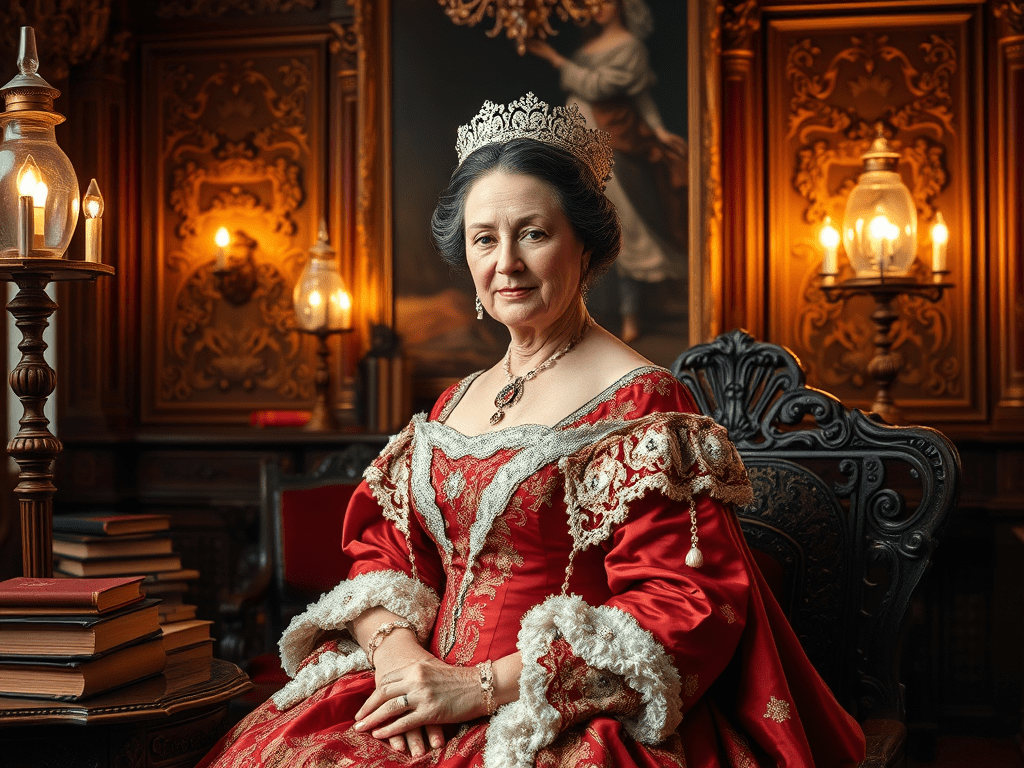
The Victorian period in English history and literature is generally recognized to have begun in the early second quarter of the 19th century, marked by Queen Victoria ascending the throne in 1837. However, when defining any literary age, it is common to identify a landmark event that serves as a starting point, even though the associated cultural and intellectual shifts often predate this event by a decade or more. Historical classifications of literary periods are often based on shifts in political rule or power dynamics, which serve as convenient markers for organizing history.
For instance, the Victorian period can be clearly delineated as beginning with Queen Victoria’s coronation in 1837 and ending with her death in 1901. Such political events provide a straightforward framework for categorizing historical periods. Similarly, the Elizabethan era is often defined by the reign of Queen Elizabeth I, from her accession to the throne to her death. These clear-cut timelines make it simpler to identify the boundaries of an age.
Challenges in Defining Literary Periods
Defining an age based on literary characteristics or sociopolitical movements, rather than historical events, presents more complexity. Movements like the Renaissance illustrate this difficulty. While the Renaissance is said to have begun in the early 13th century, it gained strength in the late 14th century and became prominent in literature during the 15th and 16th centuries. Some historians pinpoint its start to 1453, citing historical events as reference points. However, there is no definitive proof for such dates, as intellectual and artistic movements evolve gradually and cannot be confined to specific moments.
In literary history, it is impossible to provide absolute proof of when an age begins. Writers, revolutionaries, and thinkers do not abruptly change their ideologies or methods of expression on a given date. For example, even if one defines the modern age as starting in 1901 with the death of Queen Victoria, the transition to modernist thought did not occur immediately. People living through such times retain existing thought processes, and new ideas typically emerge and evolve long before they are widely recognized.
The Evolution of Thought Across Ages
Literary and intellectual transitions are not instantaneous. They often involve a gradual evolution of ideas. While defining an age using historical events may provide clarity, it does not accurately reflect the complex and overlapping nature of cultural and intellectual developments. For instance, people in the early 20th century who were raised during the Victorian period did not instantly adopt modernist ideas. Similarly, the recognition and mainstream acceptance of new ideas typically occur well after their initial emergence.
Understanding the Modern Age and Literary Periods
The transition into a new literary age is rarely recognized immediately by those living through it. For example, when Queen Victoria died in 1901, marking the end of the Victorian era, the writers of that time did not identify themselves as part of the “modern period” in English literature. The classification of literary periods, such as the modernist era, is often determined retrospectively, based on later analysis of major trends, themes, and socio-political conditions.
It is important to differentiate between “modernist literature” and “modern literature.” The modernist period specifically refers to a time frame, often the first half of the 20th century, characterized by distinct literary features. However, the term “modern” can apply broadly, as every era perceives itself as modern compared to earlier traditions. Writers during any age often view their approaches to literature, history, and society as modern, without knowing how their works will later be categorized in literary history.
Retrospective Analysis of Literary Movements
The classification of literary movements such as Romanticism, Neoclassicism, or Modernism lacks precise starting and ending dates. Unlike political periods, which are easily defined by events like the beginning of Queen Victoria’s reign in 1837, literary movements evolve gradually. For instance, Victorian literature can be easily linked to the timeline of Victoria’s reign (1837–1901), but literary trends often precede or overlap with political eras.
For example, key Victorian writers like Alfred Tennyson, Robert Browning, and Matthew Arnold began publishing their works well before Queen Victoria ascended the throne. Tennyson’s early poems date back to 1828–1830, Browning’s works to a similar period, and Arnold’s first notable publications occurred in the early 1830s. Thus, the foundational works of Victorian literature were already being written before the political era officially began.
Socioeconomic Shifts in Victorian England
To understand Victorian literature, one must examine the broader societal changes occurring in England during this period. The Industrial Revolution, which began in the 18th century and continued into the 19th century, played a transformative role in reshaping society. It marked a significant shift in the social hierarchy, which had previously been dominated by a feudal structure consisting of kings, queens, nobles, and common people.
The Industrial Revolution disrupted this traditional structure by empowering common people through trade, commerce, and colonial expansion. Ordinary individuals, previously at the lower rungs of the social hierarchy, began to accumulate wealth and influence. This socio-economic transformation deeply influenced the themes and concerns of Victorian literature, which often explored the tensions and challenges arising from industrialization, urbanization, and the changing roles of individuals in society.
The Rise of the Middle Class and Its Impact on Literature
During the Industrial Revolution, common people in England began accumulating wealth through trade, business, and other economic opportunities. This newfound economic stability allowed many to rise into the middle class. With financial growth came a desire for education, which spread rapidly throughout England during the 18th century. As the middle class gained both wealth and education, they sought representation in literature. This led to the emergence of middle-class writers who produced works that reflected their values, experiences, and aspirations.
By the 18th century, a shift in the literary landscape was evident. While some writers continued to depend on pensions from royal courts or wealthy patrons, an increasing number began to write independently. Middle-class education and literacy created a growing audience for literature, leading to the development of a commercial market for literary works.
The Emergence of Intellectual Property and Literary Independence
A significant turning point came with the establishment of laws protecting intellectual property in England by the end of the 18th century. Prior to this, most writers relied on the patronage system, where wealthy individuals funded their creative work. This system was necessary because the market for literature was limited, as only a small, educated elite read books. Writers under patronage often produced works tailored to their patrons’ tastes while also incorporating their personal emotions and ideas.
However, the introduction of intellectual property laws coincided with the rise of a free-market economy. This allowed writers to profit directly from their works by selling them in a competitive literary market. By the early 19th century, the growth of literacy and the expansion of the reading public made it possible for authors to sustain themselves by selling their writings. This development was particularly significant for Romantic authors, who sought independence from the constraints of the patronage system. They aimed to appeal directly to a broader audience, rejecting the need for a single wealthy benefactor.
Novels and the Literary Market
The advent of the novel in the mid-18th century played a key role in the commercialization of literature. As novels gained popularity, they became a primary means for writers to reach a wider audience and earn money through the sale of copies. The market for books evolved beyond catering to elite tastes, opening up opportunities for authors to achieve financial independence through their craft. By the 19th century, the sale and distribution of literary works became a viable way for writers to sustain themselves, marking a significant departure from earlier systems of patronage.
The Evolution of Literary Profitability and Independence
In earlier literary periods, writers like William Shakespeare did not primarily earn their income through the publication of their works. For instance, Shakespeare’s plays were initially published in quarto editions and were not widely available for collective reading. Similarly, his poems were published but did not provide significant financial returns. Instead, Shakespeare earned money through the performance of his dramas. As an actor, playwright, and possibly a producer and director, he profited from ticket sales at his plays, which were highly popular and well-attended during his time.
During the Renaissance period, theatre was a central form of entertainment, but its prominence declined when theatres were banned in the mid-17th century. After their reopening during the Restoration period, theatres struggled to regain their former popularity and economic viability. This led writers to explore alternative methods of earning through literature, particularly in the 18th century.
By the late 18th century, the literary market had become more democratic. Writers began publishing independently, selling their works directly to readers. This shift allowed authors to profit from their writings without reliance on patronage. The newfound ability to earn money from selling copies of books reflected the growing commercialization and accessibility of literature. The trend marked a significant departure from the earlier reliance on patrons, liberating writers to explore a broader range of subjects and themes.
The Romantic Period and Literary Freedom
With the rise of Romanticism, literature underwent a transformation. The Romantic period rejected the constraints imposed by traditional rules and conventions, embracing freedom of expression in form, language, and subject matter. Writers sought to liberate themselves from restrictions tied to class, society, and culture. Romantic literature became intensely subjective, often rooted in the personal experiences and emotions of the authors.
This emphasis on subjectivity continued beyond the Romantic period but was shaped by two major intellectual movements: the Industrial Revolution and the Enlightenment. The Industrial Revolution, which began in the late 18th century, transformed society and influenced literary themes by addressing the rapid changes brought about by industrialization. Writers engaged with the tensions between progress, urbanization, and human experience, which became recurring themes in the literature of the time.
The Enlightenment and Rational Inquiry
The Enlightenment, which emerged in the late 17th century and gained momentum through the 18th century, brought a focus on empirical knowledge and rational inquiry. Thinkers and writers of this period sought to question and explain all aspects of existence through reason and scientific principles. Enlightenment thinkers believed that all phenomena, from metaphysics to natural sciences, could be understood and explained logically.
This movement influenced literature by encouraging a shift toward questioning traditional beliefs, such as the existence of God, and applying rational frameworks to understand the world. The Enlightenment’s emphasis on intellectual freedom and critical thinking complemented the Romantic period’s drive toward individualism and creativity, resulting in a rich and diverse literary landscape that reflected the dynamic societal changes of the era.
Enlightenment and Challenges to Religious Doctrine
During the Enlightenment period, scientific discoveries and empirical knowledge began challenging long-held religious beliefs and explanations for natural phenomena. Many mysteries that were previously attributed to divine will or the actions of God came under scrutiny. For example, before the work of Sir Isaac Newton, people believed that objects fell to the Earth because it was the will of God. Newton, however, explained the phenomenon through the law of gravitation, showing that objects fall due to Earth’s gravitational force. He also demonstrated that the same force governs the motion of celestial bodies, such as the Moon orbiting the Earth and the planets orbiting the Sun.
These discoveries were met with resistance from religious authorities, who viewed them as a threat to the supremacy of God. Newton, despite his contributions to science, faced opposition from the Church and was ultimately denied recognition as a Christian. This pattern of conflict between scientific inquiry and religious orthodoxy was not unique to Newton.
Contributions of Copernicus, Galileo, and Others
The heliocentric model of the solar system, proposed by Copernicus and supported by Galileo, similarly contradicted the geocentric worldview endorsed by religious doctrines at the time. According to the geocentric model, the Earth was the center of the universe, with the Sun and other celestial bodies revolving around it. The Bible, as interpreted then, supported this notion and even included imaginative explanations for natural phenomena, such as the belief that the Sun bathed in the ocean every night and rose refreshed in the morning.
Galileo’s use of the telescope provided empirical evidence for the heliocentric model, proving that the Sun, not the Earth, was the center of the solar system. This discovery, along with others, fundamentally challenged the Biblical view of the cosmos. As a result, Galileo and other scientists faced severe repercussions. Galileo, for instance, was arrested and forced to recant his findings under threat of punishment. Despite these challenges, the heliocentric model eventually gained acceptance, replacing the geocentric worldview.
Discovery of Earth’s Shape and Circumnavigation
Another key Enlightenment-era breakthrough was the rejection of the belief that the Earth was flat. Explorers and scientists demonstrated that the Earth was spherical. By traveling continuously in one direction—either eastward or westward—individuals were able to return to their starting point, proving the Earth’s round shape. This evidence further discredited the flat-Earth theories rooted in earlier interpretations of religious texts.
The Shift from Dogma to Empiricism
The Enlightenment period marked a significant transition in human thought. Empirical evidence and rational inquiry began to take precedence over dogmatic beliefs. These scientific discoveries and challenges to traditional views not only reshaped humanity’s understanding of the universe but also laid the groundwork for modern science. This period saw the gradual displacement of theological explanations with scientific ones, transforming the intellectual and cultural landscape of the time.
Enlightenment and the Shift in Thought
By the end of the 18th century and into the 19th century, the Enlightenment had brought about significant changes in the way educated and literate people thought about the world. However, it is important to note that this shift in perspective was not universal. Only a small percentage of the population—estimated around 15-20%—embraced the Enlightenment’s rational and empirical methods of understanding. These individuals were exposed to new scientific ideas and discoveries that challenged theological explanations of natural phenomena.
Evolutionary Theories: Lamarck and Darwin
In the Victorian period, one of the most significant scientific contributions came from Charles Darwin. However, before Darwin, another scientist, Jean-Baptiste Lamarck, proposed his own theory of evolution. Lamarck suggested that species adapt to their environment over time through acquired traits. For example, he posited that giraffes originally had short necks, but as food on the ground became scarce, they began to graze on trees. This repeated behavior supposedly caused their necks to lengthen over generations. Although Lamarck’s ideas were influential at the time, they were later supplanted by Darwin’s theory of natural selection.
Darwin, unlike Lamarck, conducted extensive field research to develop his ideas. During his voyage to the Galápagos Islands off the coast of Ecuador, he observed significant variations in species, particularly finches, which led him to formulate the concept of “survival of the fittest.” Darwin noted that survival was determined not just by physical strength but also by adaptability and intelligence. For instance, taller trees could outcompete shorter ones for sunlight, while creeping plants used their ability to climb to access light. This competition extended to animals as well, with stronger or more resourceful individuals outlasting weaker ones.
Survival of the Fittest
Darwin’s concept of “survival of the fittest” described how organisms with traits better suited to their environment were more likely to survive and reproduce, while those without such traits faced extinction. He observed that giraffes, for example, did not evolve from a single type but included both short-necked and long-necked varieties. When food on the ground became scarce, the short-necked giraffes could not compete and eventually died out, while the long-necked ones survived by grazing on trees. This natural selection process explained the extinction of less adaptable species and the survival of those better suited to their environment.
Evolution of Humans
Darwin also extended his theory to the evolution of humans. He proposed that humans evolved from earlier primates, particularly apes, through gradual adaptations over time. Among these ancestral species were Neanderthals and Homo sapiens. Although the exact chronological details may vary, Darwin’s work established that humans are part of the evolutionary process, arising from earlier species through natural selection.
Scientific Challenges to Religious Beliefs
During the Victorian period, scientific discoveries and theories increasingly challenged religious doctrines, particularly those derived from the Bible. One such challenge was directed at the “Book of Genesis,” which claims that the Earth and the universe were created in seven days, with the entirety of creation occurring only 5,000 to 7,000 years ago. According to Genesis, God created the universe, humans, animals, plants, and non-living objects in a specific sequence over six days, with the seventh day being a day of rest, corresponding to Sunday.
However, scientific advancements debunked these claims. Geologist Charles Lyell played a pivotal role in this regard. Lyell, a prominent figure of the Victorian era, studied the geological layers of mountains and concluded that the formation of a single layer of rock took millions of years. This evidence demonstrated that the Earth was not a few thousand years old but instead millions or even billions of years old. Lyell’s findings directly contradicted the biblical timeline and further diminished the credibility of the Genesis creation narrative.
Geological Insights: Layers and Time
Lyell’s geological studies revealed that the Earth’s history is vastly longer than the timeline suggested by religious texts. He demonstrated that each layer of stone and sediment represented a time span far exceeding human comprehension, with some layers taking millions of years to form. This evidence showed that the Earth had undergone immense geological changes over billions of years, rendering the biblical story of a 7-day creation obsolete. This revelation was a significant blow to the religious interpretation of Earth’s origins.
The Idea of Hell and Scientific Explanation
Another aspect of religious belief that came under scrutiny was the description of Hell. Biblical and ancient texts described Hell as a place of eternal fire, torment, and a river of burning flames. In early Christian beliefs, Hell was thought to exist physically on Earth. This notion was often linked to volcanic activity near the Mediterranean, which featured prominently in literature such as Homer’s Odyssey and Dante Alighieri’s Divine Comedy. Both works describe Hell with vivid imagery of fire, torment, and rivers of molten flames.
Scientific discoveries provided an alternative explanation for these phenomena. Geologists explained that what was historically interpreted as “Hell” was, in fact, volcanic activity. Volcanoes, with their fiery magma chambers and lava flows, resemble the biblical description of Hell. When volcanoes erupt, magma and lava flow out, appearing as rivers of fire. This understanding replaced the mythological concept of Hell with a scientific explanation involving tectonic activity and geological processes.
Literature and the Scientific Context
These scientific advancements during the Victorian period emphasized the importance of understanding the cultural and intellectual context when studying literature. The works of the era often reflect the tension between religious beliefs and emerging scientific thought. Writers like Dante, Homer, and T.S. Eliot (in The Love Song of J. Alfred Prufrock) incorporated themes of Hell and torment, shaped by these traditional ideas. However, as scientific discoveries progressed, these literary motifs took on new interpretations rooted in geological and empirical understanding.
The Victorian Crisis of Faith and the Clash Between Religion and Science
The Victorian period witnessed profound intellectual and cultural shifts, primarily due to the advancements in scientific understanding that challenged long-held religious beliefs. This era was marked by the growing tension between faith and reason, which is reflected in the literature and thought of the time.
Matthew Arnold’s Pessimism
Matthew Arnold, one of the most prominent poets and cultural critics of the Victorian age, embodied the crisis of faith that characterized the period. Arnold was deeply influenced by Christianity and lamented the decline of religious belief in the face of scientific progress. He perceived this shift as a threat to the cultural, moral, and spiritual fabric of society. In his works, he often expressed a sense of loss and despair, highlighting the “receding” of faith, as people turned increasingly to scientific explanations to understand the world. This period, sometimes described as one where “God disappeared from the world,” reflected a collective existential uncertainty.
Arnold’s poetry captures this pessimism, illustrating the vacuum created by the waning influence of religion. For Arnold, faith had once provided a sense of stability, unity, and purpose. With its decline, people were left grappling with a world that seemed devoid of divine order or meaning.
Scientific Discoveries and Cultural Transformation
The rapid advancements in science during the Victorian era not only challenged traditional religious narratives but also fundamentally altered people’s understanding of the universe. Discoveries like Charles Darwin’s theory of evolution, which argued that humans evolved from apes rather than being directly created by God as described in the Bible, struck at the heart of Christian beliefs. The biblical story of Adam and Eve, which positioned them as the forebears of humanity, was directly contradicted by Darwin’s findings. Instead, humans were now understood to be part of a long evolutionary lineage, originating from primates.
Similarly, geological discoveries by figures like Charles Lyell revealed that the Earth was not 5,000 to 7,000 years old, as suggested by the Book of Genesis, but billions of years old. These revelations undermined the religious view of creation, leaving many people struggling to reconcile their faith with the emerging scientific evidence.
The Difficulty of Adjusting to New Knowledge
Victorian society faced immense difficulty adapting to the rapid influx of new knowledge. The sudden realization that much of what was previously believed—such as the age of the Earth or the divine creation of humanity—was incorrect caused widespread doubt and discomfort. This phenomenon can be likened to more recent experiences, such as the reclassification of Pluto as a dwarf planet in the early 2000s, which challenged long-standing notions taught in schools. Such shifts in understanding force individuals to confront the idea that established “truths” can be disproven or replaced, leading to a sense of disorientation.
The Evolution Debate: Science vs. Religion
The conflict between Darwin’s evolutionary theory and the biblical account of creation highlights this cultural upheaval. While Christianity posited that humans were directly created by God, Darwin argued that humans evolved from earlier species, including apes. This challenged the very foundation of religious identity, as it implied that humanity’s origins were rooted in natural processes rather than divine intervention. For many, this notion rendered their traditional religious history irrelevant, leading to an identity crisis regarding their place in the universe.
The Dual Impact of Scientific Progress
While the scientific revolution empowered people with new knowledge and improved lives in many ways, it also created feelings of alienation and loss. The newfound understanding of the natural world came at the cost of dismantling comforting beliefs about divine purpose and order. This dual impact of scientific progress—bringing both enlightenment and existential uncertainty—characterizes the intellectual and emotional landscape of the Victorian age.
The Great Exhibition of 1851: A Turning Point in the Victorian Era
The Great Exhibition of 1851, also known as the Crystal Palace Exhibition, was a monumental event in Victorian England. Hosted in Hyde Park, London, it showcased groundbreaking inventions and achievements that highlighted England’s industrial and technological advancements. This exhibition was a source of immense national pride, reflecting the ingenuity and progress of the Industrial Revolution.
The exhibition provided a platform for unveiling innovative machinery and tools that transformed traditional ways of life. For example, one of the featured inventions was a mechanized steam thresher, which revolutionized agriculture by significantly reducing the time and labor required to separate wheat from hay. Previously, this work took months, often resulting in losses due to unfavorable weather conditions. The mechanized thresher completed the task within hours, drastically improving efficiency. Similarly, the steam engine, first invented by James Watt in the 18th century and subsequently improved upon, was a centerpiece of industrial progress, powering transportation and machinery.
For the attendees of the Great Exhibition, these innovations represented the future of humanity, a vision of modernization and industrialization that would reshape society. However, alongside this excitement came concerns about the displacement of traditional practices and livelihoods. As industries grew, the agrarian lifestyle began to decline, and society faced the reality of transitioning to an industrial economy.
The Rise of the Middle Class and Political Shifts
The Victorian period also witnessed the rise of the middle class, a social group that gained wealth and influence through trade and colonial expansion. By the mid-19th century, this middle class began asserting itself politically, demanding greater representation and rights. This movement led to significant changes in governance.
The role of the Prime Minister, for example, gained prominence during this time, often rivaling or surpassing the power of the monarchy. Parliament, fueled by the growing influence of the middle class, increasingly curtailed the powers of the monarch. By the mid-Victorian period, the Queen of England had become more of a symbolic figurehead, while Parliament and the Prime Minister wielded greater authority.
As common people gained political and economic power, they demanded voting rights and a more democratic system. This shift marked a decline in the influence of royalists, who had traditionally supported the monarchy, and a rise in parliamentary governance driven by representatives of the people.
Literature as a Reflection of Middle-Class Values
The changing social and political landscape of the Victorian era is reflected in its literature. The 19th century is often regarded as the “literature of the middle class,” as noted by literary critic E.M. Forster. This period saw a significant shift from the aristocratic and courtly themes of earlier eras to stories that explored middle-class experiences, concerns, and aspirations.
While some authors retained Romantic ideals, such as an emphasis on emotion and nature, their perspective shifted to reflect the anxieties and uncertainties of the Victorian age. The harmonious connection with nature, so prominent in Romantic literature, began to erode. Victorian writers depicted nature not as a source of spiritual solace but as something indifferent or even threatening, reflecting the period’s shaken belief systems and the profound impact of scientific discoveries.
Continuity and Discontinuity in Victorian Literature
The Victorian period retained certain thematic elements from the Romantic era, such as an appreciation for nature, but the tone and attitude shifted dramatically. The emotional connection and trust in nature celebrated by the Romantics gave way to a more ambivalent or pessimistic outlook in Victorian literature. This shift was driven by the profound societal changes of the time, including the challenges to traditional religious beliefs and the uncertainties introduced by industrialization and scientific progress.
Victorian literature often explored darker, more mysterious themes, reflecting the complexities and contradictions of the age. The optimism of the Romantic period was replaced, in many cases, by doubt, skepticism, and a sense of disconnection from the natural and spiritual world. This evolution in literature mirrors the broader cultural and intellectual transformations that defined the Victorian era.
The Victorian Compromise and Cultural Transformations
The Victorian era was characterized by a series of compromises that balanced opposing forces shaping society, politics, and culture. This phenomenon, often referred to as the “Victorian Compromise,” encapsulates the transitions and tensions of the period:
- Monarchy vs. Democracy
The monarchy’s traditional power was waning as democracy gained momentum. Parliamentary democracy, with the rising influence of elected representatives, challenged the authority of the aristocracy and monarch. This shift marked a move toward greater political representation for the middle class, reflecting the societal transition from a hierarchical system to a more egalitarian one. - Aristocracy vs. Middle Class
The political dominance of the aristocracy diminished as the middle class, empowered by wealth from trade and industry, demanded greater political and social influence. The middle class became a driving force in shaping Victorian values and governance, fostering a more democratic structure that prioritized common representation. - Tradition vs. Modernity
The era saw a clash between traditional ways of life and the rapid changes brought about by industrialization. Agrarian systems gave way to industrial production, altering both economic structures and societal roles. Similarly, literature transitioned from the patronage-based classical system to a free-market model where writers catered directly to readers, often reflecting the evolving tastes of a growing middle-class audience. - Faith vs. Science
The period was marked by a decline in religious faith as scientific advancements gained prominence. The discoveries of Darwin, Lyell, and others challenged traditional beliefs, compelling society to reconcile faith with the empirical explanations of science. This shift left many Victorians questioning their spiritual foundations, as the certainties of the past gave way to a more skeptical and scientific worldview.
Literature in a Free Market Society
The Victorian literary landscape also underwent significant changes due to the rise of a free-market economy. Writers were no longer reliant on aristocratic patronage; instead, they earned their livelihoods by appealing directly to the public. This system created a dichotomy between “canonical” authors, whose works challenged societal norms and became timeless, and popular writers, who catered to immediate public tastes but often faded into obscurity.
Authors such as Jane Austen, Matthew Arnold, Tennyson, Wordsworth, and Keats wrote works that were less commercially successful during their lifetimes but are now celebrated as part of the literary canon. Their contributions explored deeper philosophical, cultural, and aesthetic concerns, which resonate with modern audiences.
Conversely, writers of Pulp Fiction during the Victorian period earned significant wealth by producing sensationalized stories that catered to the popular tastes of the time. These works, focusing on romance, crime, and disputes, captured the attention of ordinary readers but lacked the depth or innovation required to secure a lasting place in literary history. The phenomenon is similar to contemporary writers like Chetan Bhagat, who achieve commercial success by appealing to mass audiences but are not typically regarded as literary innovators.
A Dynamic Period of Cultural Shifts
The Victorian era exemplifies a time of significant transformation, where societal values, power dynamics, and literary traditions were constantly evolving. Writers had to navigate a rapidly changing cultural and economic landscape, balancing the demands of a free market with the desire to produce meaningful, enduring works.
The Victorian Compromise reflects the balancing act that defined the era, with society grappling between old traditions and new modernities. Literature, as a mirror of these transitions, provides invaluable insights into the challenges and innovations of the period. This background is crucial for understanding Victorian works, as they capture the cultural, political, and intellectual currents of their time. With this context in mind, studying Victorian poetry becomes not only a literary endeavor but also a window into the complexities of a transformative age.
Tomorrow’s lecture will delve deeper into a specific poem, focusing on its ideas and cultural significance. The emphasis will be on understanding the broader themes and facts rather than line-by-line analysis, helping students connect the work to the Victorian context and its enduring relevance.


 Literary Latitude