
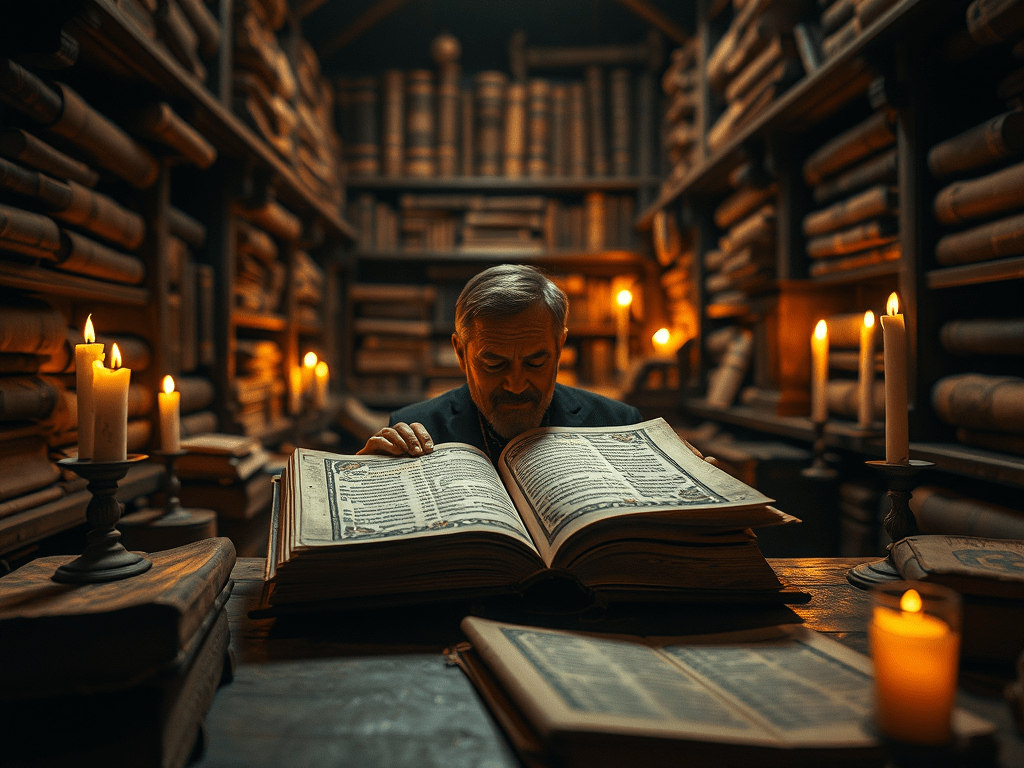
Here is a list distinguishing key aspects of the Dark Ages and Middle Ages in English literature:
Dark Ages (approximately 5th to 11th century):
- Historical Context: The term “Dark Ages” refers to the period after the fall of the Roman Empire, marked by political instability, invasions, and a scarcity of written records.
- Old English Literature: This era saw the rise of Old English (Anglo-Saxon) literature, written in the Germanic language of the time.
- Major Works: Notable works include Beowulf, The Exeter Book (which contains The Seafarer, The Wanderer), and The Anglo-Saxon Chronicle.
- Poetic Style: Old English poetry was highly alliterative, with a strong oral tradition, marked by kennings(metaphorical expressions) and caesura (a pause within a line).
- Themes: Heroic values, warrior culture, battles, fate (wyrd), loyalty, and religious conversion to Christianity were dominant themes.
- Latin Influence: Much of the scholarship was in Latin, as Christianity spread through monastic culture; the Church played a key role in preserving texts.
- Loss of Literature: Many works from this period were lost or destroyed due to wars, invasions, and cultural shifts.
Middle Ages (approximately 11th to 15th century):
- Historical Context: The Middle Ages follow the Dark Ages and are often divided into Early, High, and Late Middle Ages, leading up to the Renaissance.
- Middle English Language: English transitioned from Old English to Middle English (post-Norman Conquest), marked by Norman French influences on the vocabulary and grammar.
- Major Works and Writers:
- Geoffrey Chaucer: The Canterbury Tales (late 14th century) is a seminal work, offering insight into various social classes and character types.
- William Langland: Piers Plowman (14th century) is an allegorical narrative exploring social justice and the role of religion.
- Sir Gawain and the Green Knight: A chivalric romance from the 14th century, showcasing the Arthurian tradition.
- Thomas Malory: Le Morte d’Arthur (15th century) codified many Arthurian legends into a cohesive narrative.
- Religious Literature: Much of the literature had a strong religious influence, with mystery plays, morality plays (e.g., Everyman), and sermons being popular forms.
- Literary Themes: Chivalry, courtly love, faith, morality, and allegory were central themes during this period.
- Growth of Universities: Institutions like Oxford and Cambridge fostered intellectual activity, including the study of classical literature and philosophy.
- Evolution of Drama: Early forms of English drama began with religious performances, often enacted during festivals or inside churches.
- Manuscript Culture: Literature was still largely produced by hand, with illuminated manuscripts being key forms of artistic expression.
These points illustrate the continuity and evolution from the Dark Ages into the broader cultural and intellectual movements of the Middle Ages.


 Literary Latitude