
In the quaint village of Anandapur, nestled between the once lush hills and the winding river Ananya, the community faced an existential threat. The trees that had blanketed the hills and protected the villagers from the capricious whims of nature were gone, leaving behind a scarred landscape. The air felt harsher, the water scarcer, and the soil barren. Among the villagers, a young teacher named Mira stood firm, her resolve as unyielding as the ancient oaks that once stood tall.
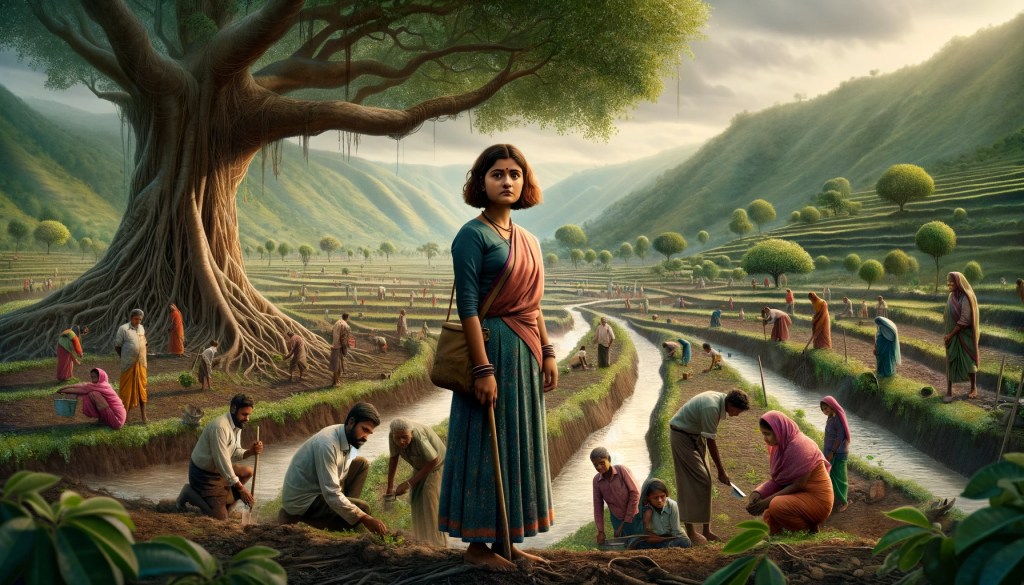
Mira remembered the stories her grandmother told her of how the woods teemed with life, how the trees whispered secrets on the wind. It was this memory, bright and vivid, that fueled her determination. She saw the despair in her neighbours’ eyes, the helplessness in their shrugs as they looked upon fields that yielded little but dust. But where they saw desolation, Mira saw possibility.
She began by organising weekly meetings under the shade of the community’s last standing banyan tree, where she spoke of change. “Our land has given us much,” she said one evening, her voice steady, “now it’s our turn to heal it, for our children and for all the children who will call Anandapur home.”
Her passion ignited a spark. The village youth, inspired by Mira’s vision, were the first to join her. They started small—a tree planting initiative. Every Sunday, young and old gathered, armed with shovels and saplings. The first few attempts were met with challenges; many saplings did not survive, and the monsoon was weaker than ever, leaving little water for irrigation. Yet, with each setback, Mira’s resolve grew stronger.
As months turned into a year, the green patches on the barren hills slowly expanded. Mira introduced the villagers to rainwater harvesting techniques she learned from old texts and new friends in distant places. They built small check dams and used mulch from their kitchen wastes to retain soil moisture. It wasn’t just about planting trees; it was about changing lives.
The village school where Mira taught became a hub of environmental education. Children learned not only about maths and language but also about the ecology of their surroundings. They became little ambassadors, taking their lessons back to their families, spreading Mira’s message like the seeds of wildflowers.
Three years from the day Mira first rallied the village, Anandapur celebrated its first harvest festival in what felt like a lifetime. The fields were lush with crops, swaying in a gentler, cooler breeze. The river Ananya ran clearer, reflecting the vibrant green of the hills. Wildlife, which had once fled, returned. Birds sang from the branches of young trees, their melodies a song of thanks.
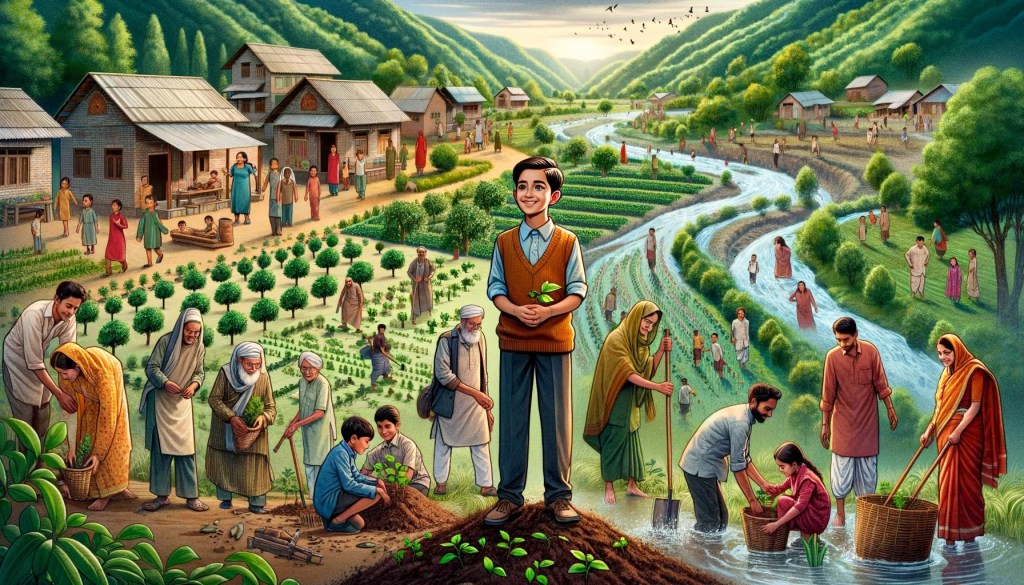
Mira stood beside the banyan tree, now surrounded by a small grove of saplings that had flourished into youthful trees. The villagers gathered around, their faces no longer marked by the lines of worry but with smiles of pride and hope. “We have learned that the earth does not belong to us; we belong to the earth,” Mira told them, her voice resonant with the wisdom of the woods. “Today, we celebrate not just a festival of harvest but a festival of life.”
And so, Anandapur was reborn, a testament to the resilience of the human spirit and the healing power of nature. Mira’s green awakening spread beyond the village, inspiring neighbouring communities to start their own movements, all sprouting from the seeds of change sown in a small village with big dreams.



 Literary Latitude