
Keywords
Unity, Diversity, Women’s Purity, Societal Standards, Project Writing, Power Dynamics, Control, Patriarchy, Nationalism, Hinduism, Family Politics, Masculinity, Technology, Religion, Politics of Gender, Patriarchal Society, Representation, Societal Expectations, Secularism, Normalcy, Hindu nationalism, Future Society, Dystopian Novels, Religious Practices, Dystopian Future, Nehru’s Vision, Societal Changes
Summary
Prayag Akbar’s Portrayal of a Future Society
– Akbar’s novel Leila (2017) envisions a future society, exploring potential courses of action and situations that may arise in the coming decades.
– The book aims to reimagine the future and its societal structures.
– The author draws upon the past 10 to 20 years of the current century to construct this vision of the future.
Societal Changes and Their Impact
– The writer contemplates the changes in society and their potential long-term effects.
– Questions about the future of relationships, friendships, and connections arise.
– The novel explores the dynamics between Muslim and Hindu communities as an example.
Secularism in India
– India adopted secularism in its constitution to respect all religions.
– Secularism doesn’t mean favoring all religions, but giving people the freedom to choose their own faith.
– Over time, people started patronizing certain religions, deviating from the true meaning of secularism.
Evolution of Nationalism in India
– Nationalism in India has changed since independence, becoming more Hindu in nature.
– The current form of nationalism is different from the nationalism of Gandhi and Nehru.
– Hinduism is seen as more secular and tolerant than the current form of nationalism.
Religion and Nationalism in Pre-Independent India
– Religion played a significant role in shaping pre-independent India.
– Different communities, including Muslims, Parsis, and Hindus, came together to fight for India’s independence.
– Minorities like tribals and untouchables also joined the struggle for freedom.
Nehru’s Vision for Post-Independence India
– Indians united against British colonial rule, regardless of caste or religion.
– After independence, India faced challenges due to partition and the problems of refugees.
– Nehru aimed to build a nation based on unity and inclusivity.
Unity in Diversity
– Nehru aimed to unite warring communities.
– Films during that era emphasized unity despite differences.
– Examples include children born to different parents or separated brothers raised in different religions in some post-independence films.
Promoting Human Values through Religious Practices
– Religious institutions and practices promote human values, brotherhood, and acceptance of others.
– Nehru’s idea of nationalism focused on bringing Hindu and Muslim communities together.
– Communal issues were sometimes exploited for political purposes, but the overall narrative was to avoid communalism.
Evolution of Hindu Nationalism in India
– Discusses on the origins of Hindu nationalism in India, tracing its roots back to the 197ss and the founding of the Janta Party by J.P. Narayan.
– Explores the interplay between Hindu nationalism and secular nationalism in India over time.
– Examines how Hindu nationalism has come to dominate Indian politics and society.
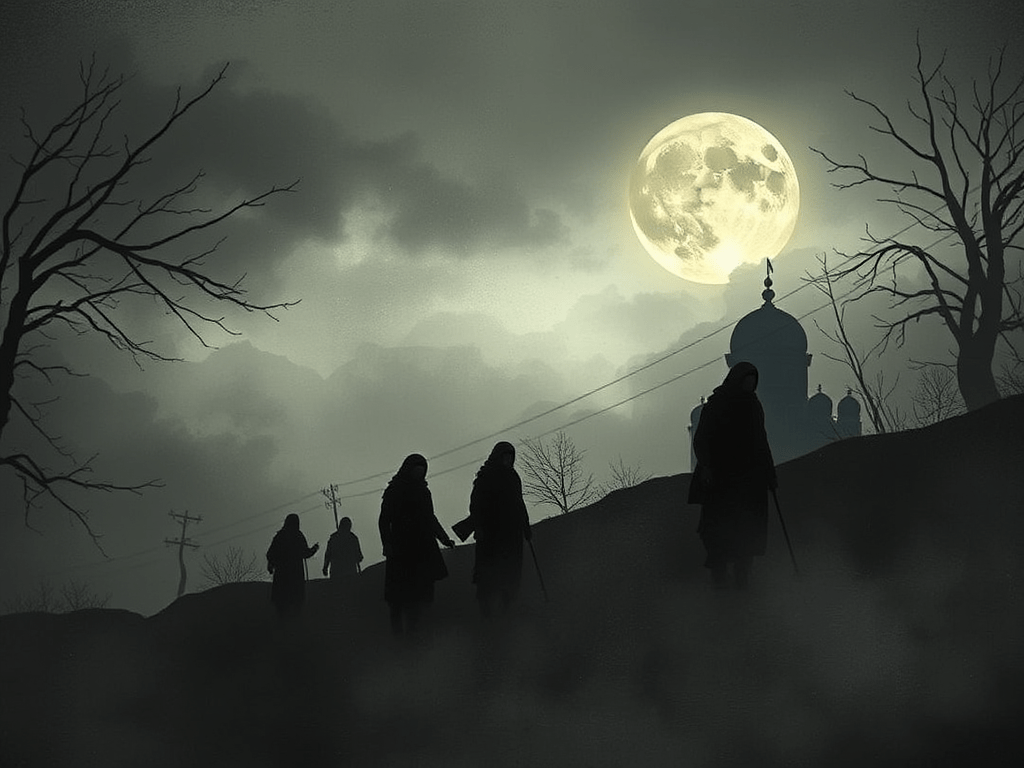
Prayag Akbar’s Leila: Predicting the Future
– The novel predicts the future, where secularism may be replaced by religious dominance.
– The author explores the possibility of disruptions and changes in nationalist identity.
– The novel highlights concerns about the condition of women in the future society.
Nationalism and Masculinity
– Nationalism is often associated with masculine traits such as power, strength, and valour.
– Wars have historically been male-dominated activities, with women rarely serving as soldiers or leaders.
– Women tend to favor peaceful resolutions and avoid force, while men are more likely to use power and strength.
Women as Victims of Excessive Nationalism
– Excessive nationalism can victimize women.
– Men can adopt and enforce societal norms for women without their consent.
– Women were not consulted when designing purity programs that define their virtue.
Societal Standards for Women’s Purity
– Women are expected to prove their purity through various processes, which were not consulted by them.
– These standards are imposed on women and not chosen by them.
– Men are identified by their communal, social, political, and economic identities, while women are primarily identified by their relationship to men.
Recognition of Women’s Individual Identity
– Women’s recognition in society is often tied to their male counterparts.
– The novel highlights a woman’s decision to marry a Muslim boy despite societal expectations and restrictions.
– Powerful individuals shape policies that impact common people’s lives.
Impact of Societal Expectations on Individual Choices
– Bills introduced without consulting people may lead to compromising one’s identity and choices.
– Certain choices, like inter-religious marriages, can hurt societal sentiments and lead to negative consequences.
– Societal expectations, especially towards women, can result in revengeful actions.
Patriarchal Society and Power Dynamics
– Discussion on the limitations imposed by society and the patriarchal nature of relationships.
– Power dynamics and control in relationships, particularly focusing on women.
– The concept of normalcy and deviance as determined by those in power.
Different Perspectives on Normalcy
– Normalcy varies depending on socioeconomic status, with different meanings for rich and poor individuals.
– For progressive thinkers, interclass marriages are normal, while conservatives view them as deviant.
– Exploitation is normalized for some, while it’s considered a crime and torture for those being exploited.
Family Politics
– Father wants to control children and mother.
– This political relationship is not taught to immature students to avoid revolt.
– Family is unique. Respect the value culture and tradition of family and imbibe them.
Understanding the Politics of Gender
– Politics of gender exists not only in the workplace but also within the home.
– Patriarchy, as an ideology, is not limited to men but is instilled in children through upbringing and societal norms.
– Gender discrimination is perpetuated through lessons and behaviors learned from culture.
Patriarchal Societies and Technology
– Patriarchal societies have existed for centuries and are unlikely to change significantly in the near future.
– Advancements in technology may exacerbate patriarchal structures by providing new means of control.
– The relationship between technology and liberation is complex and relative, as technology can both empower and control individuals.
Technology and Power Dynamics
– Advanced technologies may change our lives, but raise questions about control and transformation of individuals.
– Gaps in access and understanding of these technologies may lead to certain people gaining powerful positions.
– Representation of women in power is limited, and those in power are often controlled by men.
Power Dynamics and Control
– Power is fluid and can shift between individuals.
– People in power often seek to maintain it by controlling others and removing obstacles.
– Women have historically been denied the freedom to become a threat to the patriarchy.
The Novel’s Prediction of a Dystopian Future
– The novel predicts a future where women’s access is very restricted, and fair representation lacks.
– Societies are changing negatively, and this change is reflected in the novel.
– The future depicted is unpleasant, destructive, cruel, barbaric, and terrifying.
Dystopian Novels Predicting the Future
– Dystopian novels predict the future based on current scientific advancements.
– Powerful people use science and technology to control others and the world’s resources.
– These novels often depict a future that is uncomfortably difficult to live in.
Understanding the Novel for Project Writing
– Writing a project on the novel, not the film adaptation.
– Differences between the novel and film should be highlighted.
– Analysis of the novel is the focus, not that of the web series.


 Literary Latitude